

SimLab is a major player in the sim-racing industry, in addition to being the F1 partner of AMG-Petronas. The Dutch brand quickly established itself in a highly competitive market by offering aluminum-profile chassis at prices that are reasonable by any standard.
Today, the SimLab lineup includes two series of sim-racing cockpits: the GT1 and P1X. In addition, a separate chassis can be added that was designed to celebrate the partnership with AMG-Petronas in F1, making it a Formula-style device.
In the GT1 lineup, we have the Evo and the Pro to meet the needs of beginner and amateur sim-racing drivers. The same goes for the P1X series, with the Pro and Ultimate models. They’re based on the same cockpits but offer upgrades that are highly valued in sim racing.
Let’s take a look together at which cockpit to choose between the GT1 Evo, the GT1 Pro, and the P1X Pro. These chassis are aimed at different audiences, both in terms of sim-racing needs and budget.
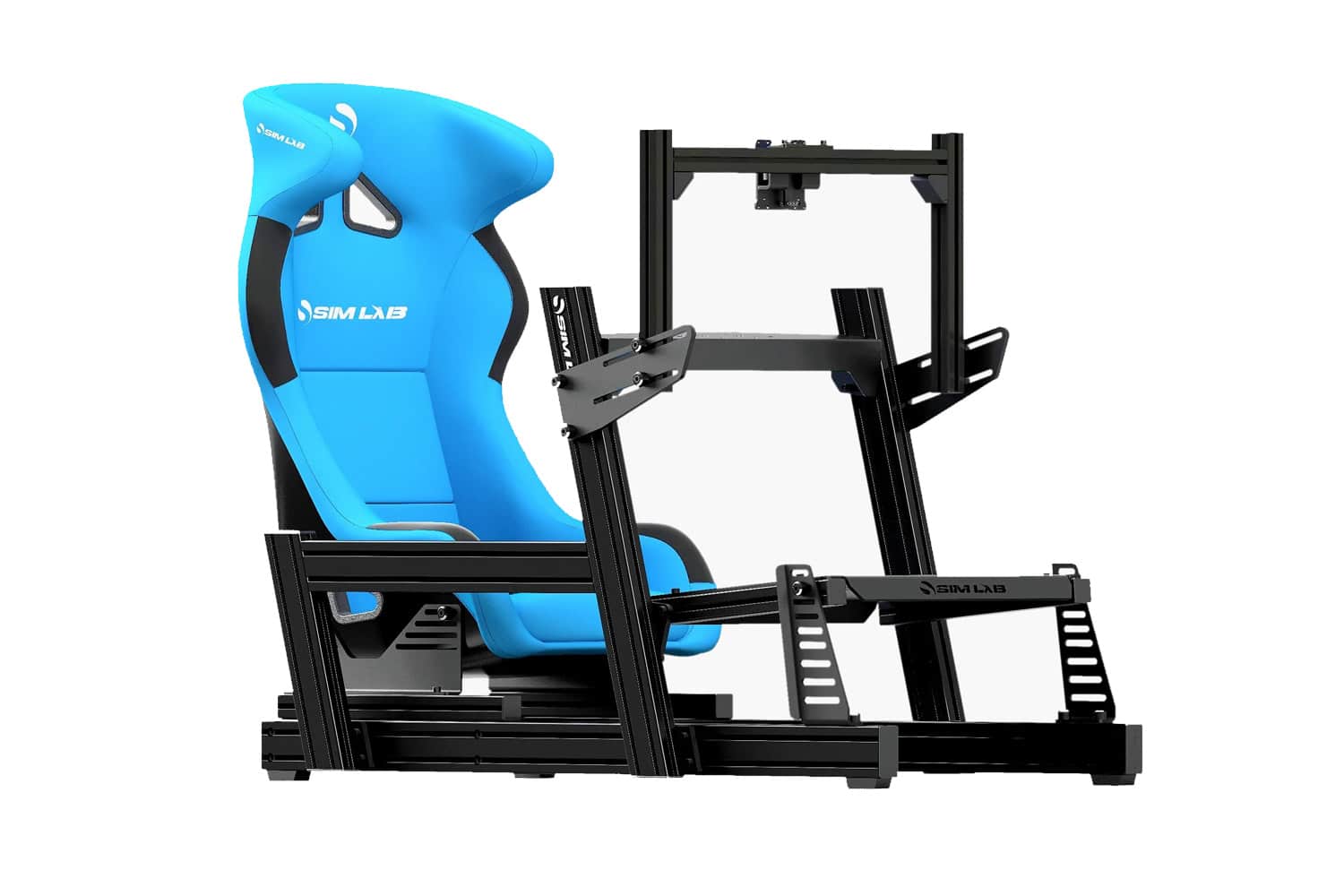
Simlab GT1 Pro cockpit sim racing
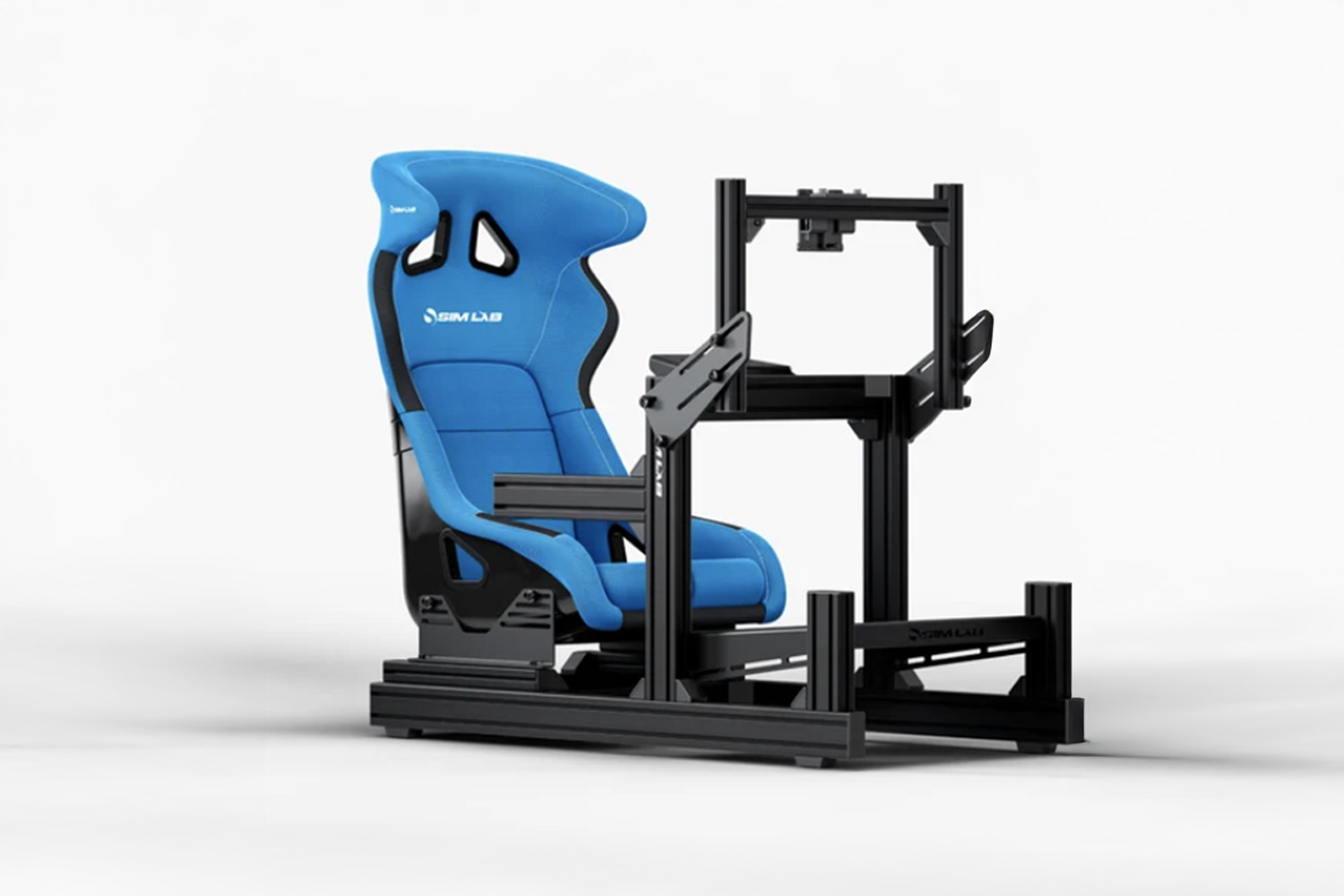
Cockpit sim lab GT1 Evo sim racing
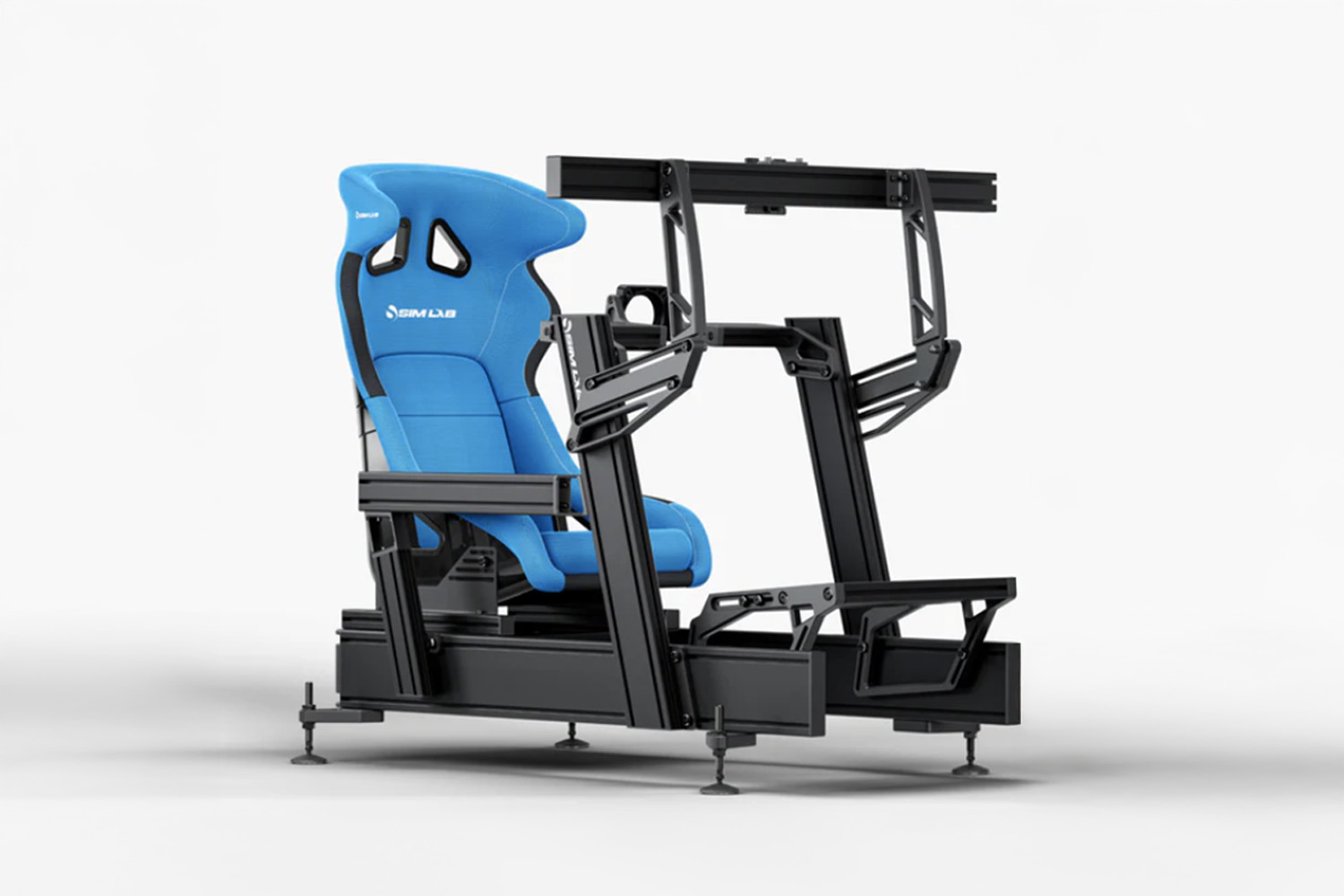
Cockpit sim lab P1X Pro sim racing
Frame Design and Build Quality
As you know, almost all sim-racing chassis made of aluminum extrusions look alike. They consist of aluminum bars arranged to form a cockpit or a structure that can accommodate sim-racing peripherals.
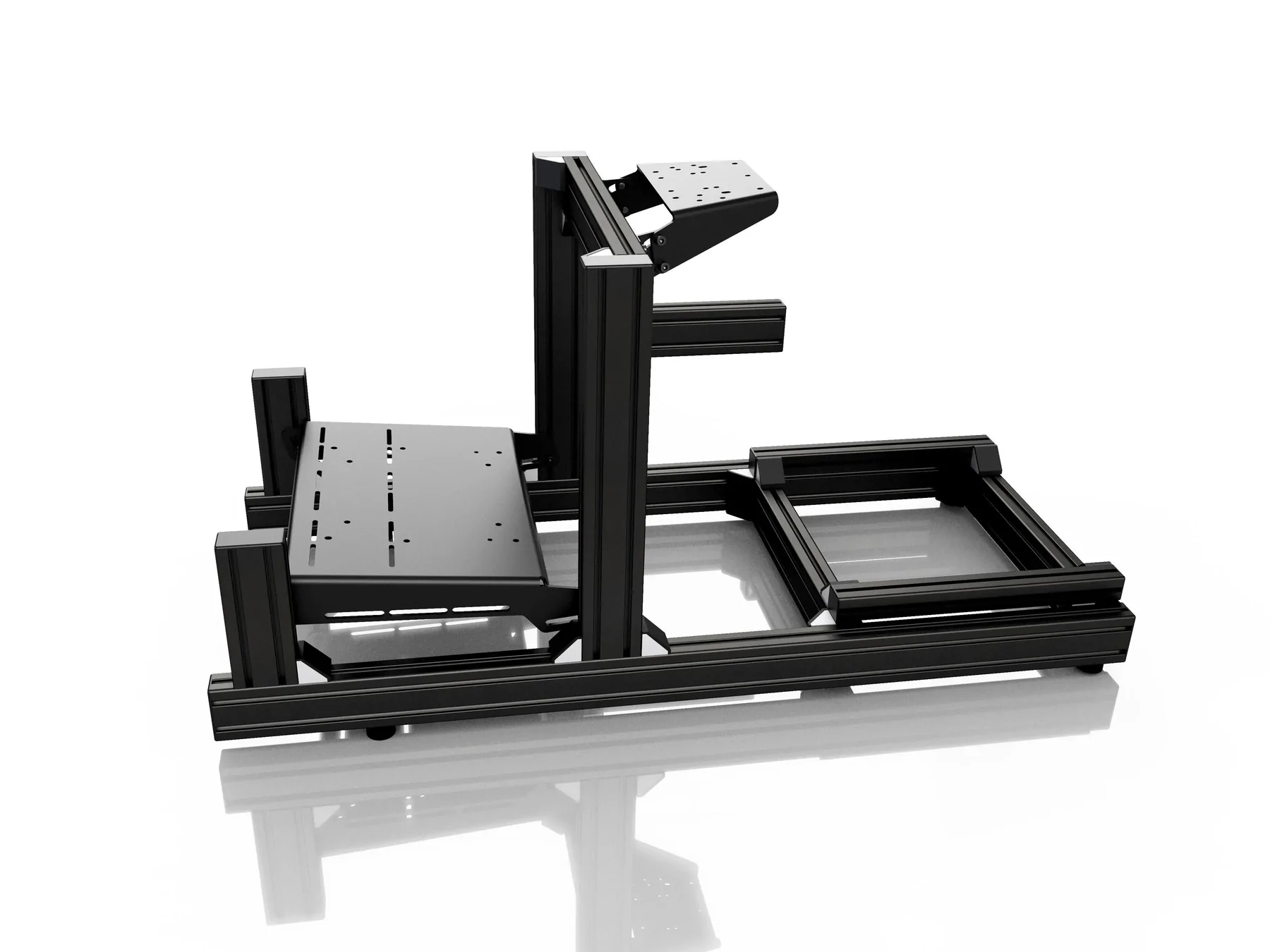
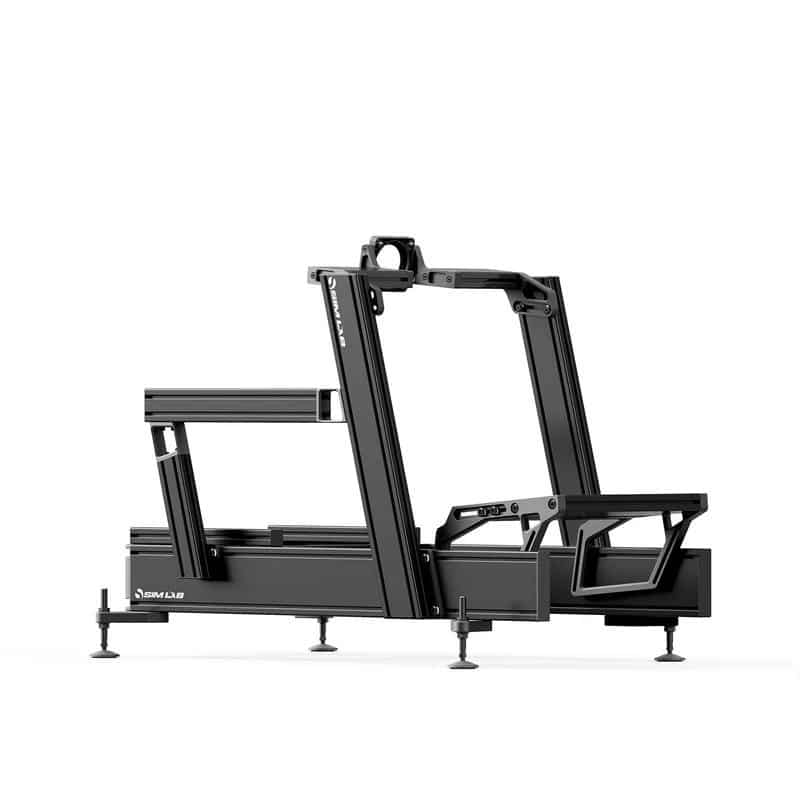
The GT1 Evo is SimLab’s entry-level cockpit. It features a simple design, with a black finish, vertically arranged aluminum profiles, and mounts for the bucket seat, base, pedal set, and even the shifters and handbrake. It’s minimalist, simple, and above all, beautiful.
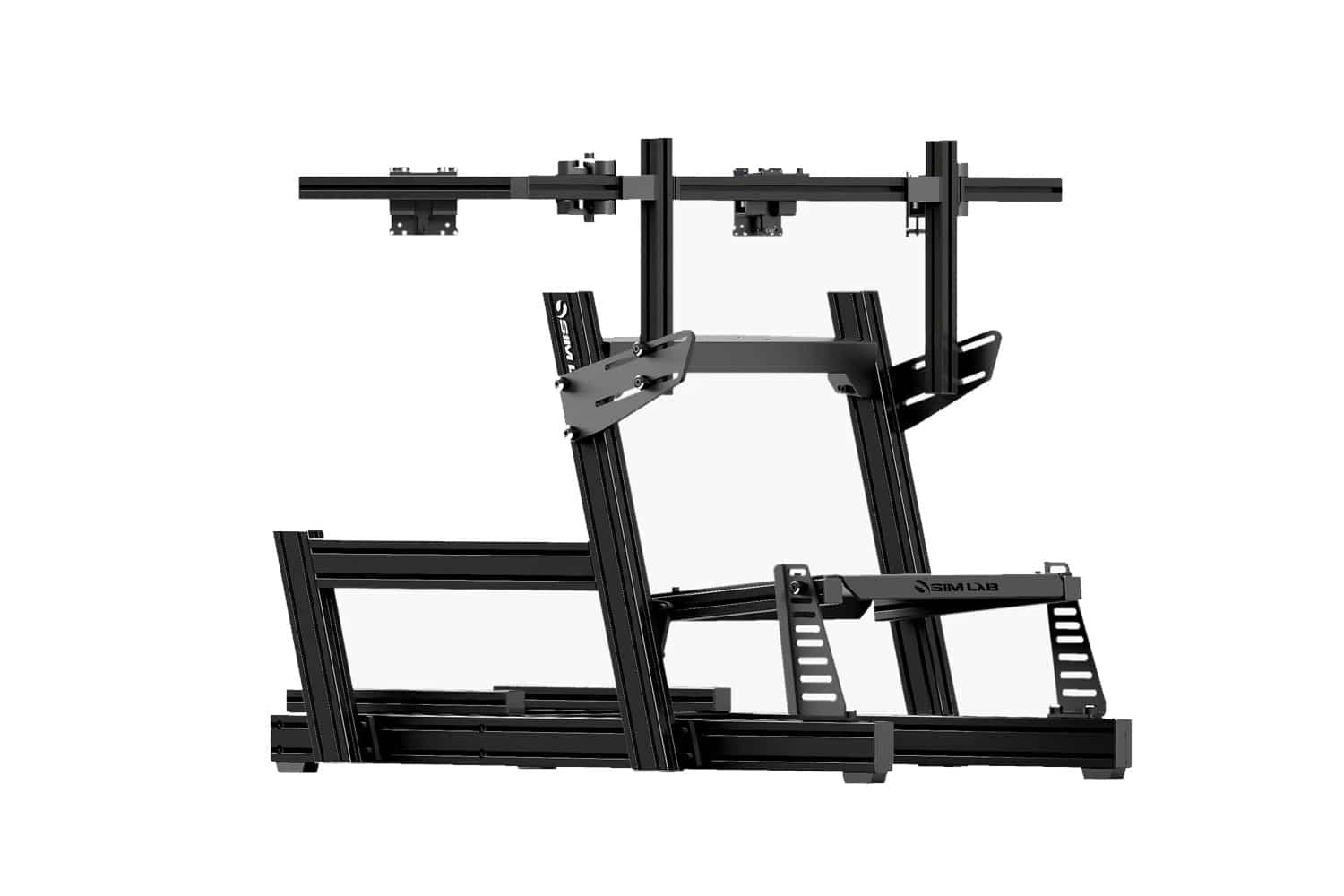
The GT1 Pro largely retains the Evo’s design but changes the angles. Instead of having vertical struts—and a design that draws inspiration from skyscrapers—the GT1 Pro angles its struts toward the pilot. As a result, it has a distinct visual appearance, and—more importantly—it’s functional, because when the supports are angled, they offer better adjustability for the rider. Nevertheless, it’s clear that the Pro is based on the Evo, as the main structure remains the same.
Now let’s move on to the P1X Pro. It’s the most affordable option in the P1X lineup, and it also features design elements from the GT1 Pro: the mounts are angled toward the driver, with aluminum profiles that are significantly thicker than those on the GT1 models. Whether it’s the main structure or the mounts, everything is sturdier to accommodate large sim-racing setups. And just like on the other chassis models, black dominates the design, accented by a few SimLab logos.
In terms of build quality, these are premium products, even if the price doesn’t always reflect that—especially with the GT1 Evo. They’re well-machined, well-assembled, and, above all, meticulously crafted down to the smallest detail. These are high-quality products, and you can tell that at first glance.

Cockpit Settings
The three chassis offer different adjustment options on the base support—the deck—whether for depth or height. As for the bucket seats, all three cockpits feature side mounts for attaching side rails and/or the seats. This design is common to all chassis, since they share the same basic structure.
When it comes to shifters and handbrake mounts, the GT1 Pro and P1X Pro have the edge because they offer longer parts. On the GT1 Evo, the mount is short, which can be a problem if you’re tall—you’ll really have to stretch your arm to reach the device.
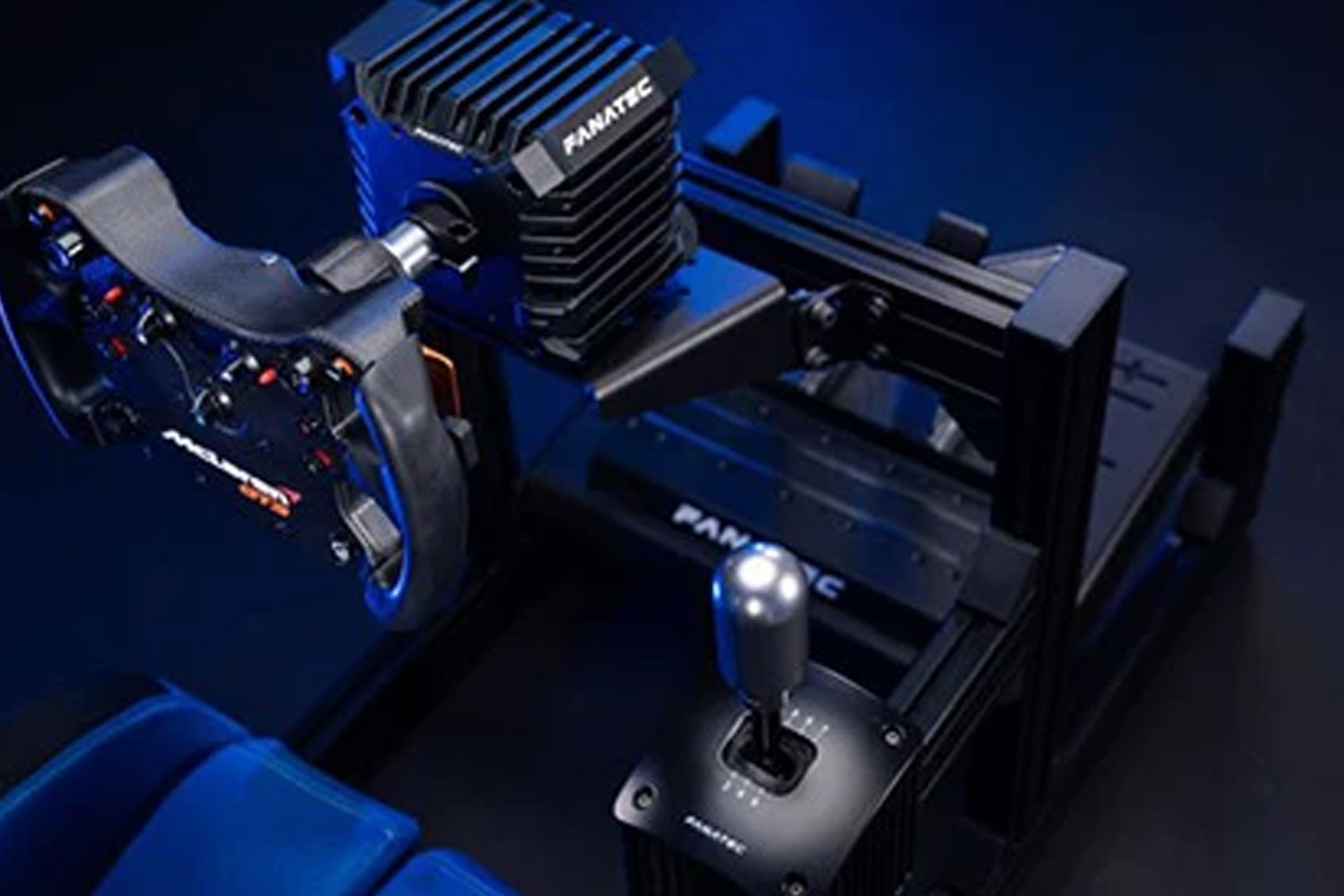
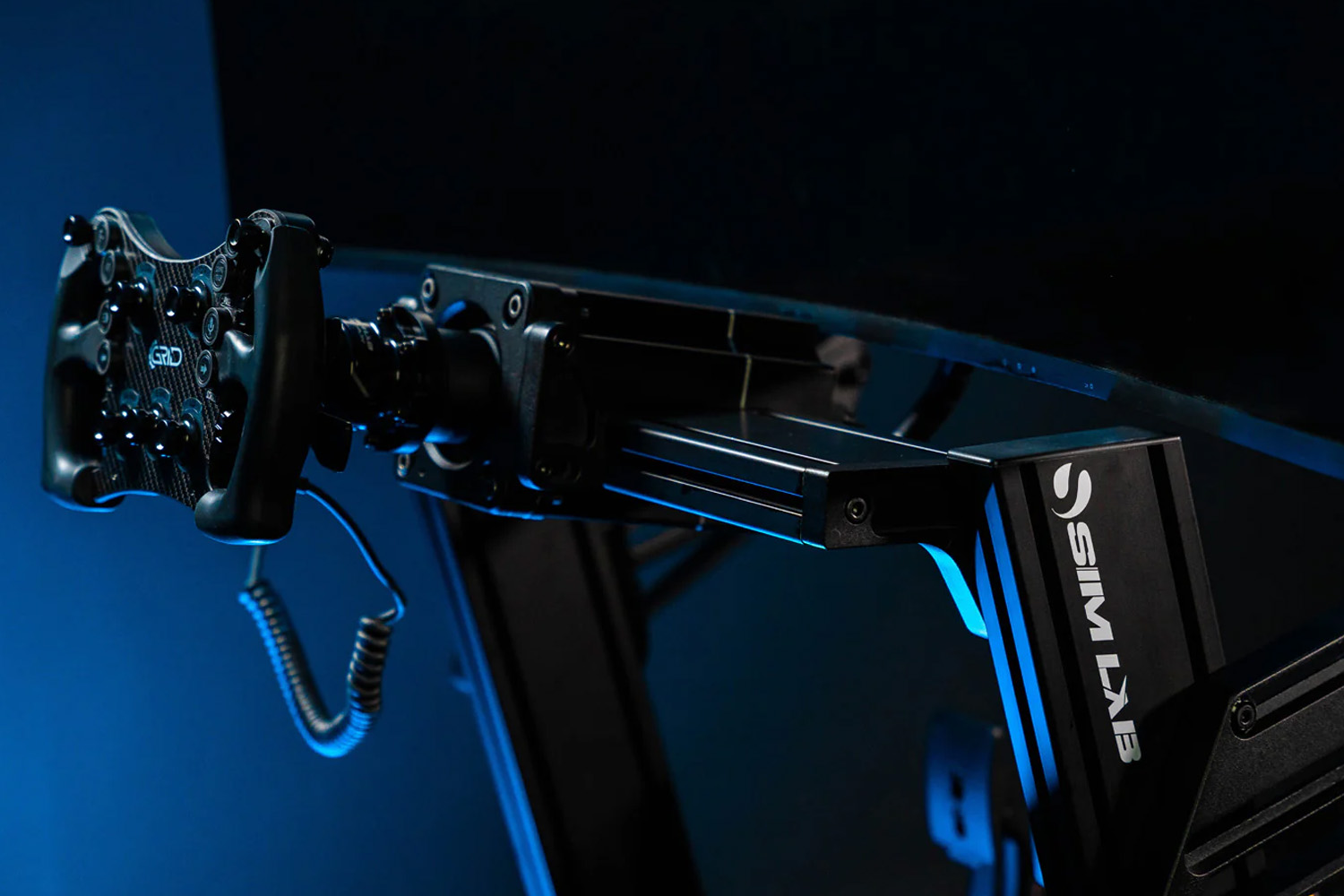
Let’s move on to the crankset mount. On the GT1 Evo and Pro, the design is more or less the same, featuring a plate that can be adjusted to several angles. On the GT1 Evo and Pro, these plates are bolted to the arms of the base mount, so you can’t adjust them independently—unlike on the P1X Pro. In fact, the P1X Pro’s bracket is a separate component that attaches directly to the frame mounts (the ones for the structure), and you can adjust both its depth and angle.
When it comes to the deck, the P1X Pro comes out on top, since you can choose between front mounting, bottom mounting, or mounting specifically designed for Fanatec bases. Additionally, the deck is adjustable for angle, depth, and height on the P1X Pro, just like on a car steering wheel. On the GT1 Evo and Pro, you only have bottom mounts, and the decks are adjustable for depth and height only.

Compatibility with bottom brackets and cranksets
The GT1 Evo and Pro feature a flat deck that can accommodate Direct Drive bases with bottom-mounting. As for the P1X Pro, its deck is customizable directly through SimLab, and you can opt for a cockpit mount that offers front mounting, bottom mounting, or one specifically designed for Fanatec Direct Drive bases.
As for the pedal assemblies, all three cockpits can accommodate a wide range of peripherals, including both standard and load cell models. There’s really no limit when it comes to pedal sets, and as long as you have one that mounts from the bottom, you’ll have no issues with the GT1 Evo, Pro, or P1X Pro.
Options available for each cockpit
SimLab takes the issue of options very seriously, because while the manufacturer is known for offering affordable products, the price can quickly triple if you check all the boxes in the configurator.
The GT1 Evo offers optional monitor mounts, four bucket seats—two from Sparco and two from SimLab—and seat rails that go with the seats. And with the GT1 Pro, it’s exactly the same story, with identical options.
The P1X Pro differs from the other two chassis in one key aspect: the decks. In fact, the rail options have been replaced with Direct Drive base deck options, since the rails come standard on the cockpit. So you have 3 different decks, 2 monitor mounts, and 4 bucket seats.

The Sturdiness of the Frames
Since all three SimLab chassis use aluminum profiles, there is no flex during sim-racing sessions, as long as you have a DD base that produces less than 25 nm of torque. And that applies to the GT1 Evo and the Pro. If you opt for the P1X Pro, its deck and frame can handle a Sim-Lab DDS39 TorqueSync and its 39 nm of torque.
The difference in rigidity between the GT1 and the P1X Pro is clear, because, first, they’re in different product lines, and second, their target audiences are also very different. The GT1 is aimed at beginner drivers and those with experience in sim racing, while the P1X is aimed at professionals.
As for the pedal assembly, the platform is very sturdy and can support both load cells and hydraulic versions of the devices.
Value for money
SimLab’s biggest advantage over the competition is the base price of its bare-bone chassis. However, the bill quickly adds up when you add all the available options.
The GT1 Evo costs between €375 and €1,405, while the Pro version ranges from €645 to €1,670. And the P1X Pro starts at €870 and goes up to €1,750. So yes, it’s expensive, but compared to the competition—and especially if you resist the urge to check every single option—SimLab’s cockpits offer good value for the money.
Which one to choose?
The GT1 Evo is designed for beginners in sim racing, particularly those with setups producing between 5 and 8 nm of torque. It’s a sturdy chassis that’s scalable and adaptable to many disciplines. As for the GT1 Pro, the target audience remains essentially the same, but it will be much more suited to drivers with setups that produce between 8 and 12 Nm of torque. This segment remains highly sought after by sim-racing drivers, as the basics are easy to master.
But if you’re a professional driver or a die-hard sim-racing fan who owns a sports car and participates in track days, then you’ll naturally turn to the P1X Pro, since it offers the best value for the money, as well as the greatest rigidity to accommodate the most powerful DD bases on the market, and the widest range of configuration options. Additionally, the P1X Pro is the only chassis of the three that is compatible with Active Cockpit systems.
If you want to keep your budget in check and are just starting out and/or are already skilled at sim racing, then I suggest going with the GT1 Evo. If you’re into rally racing and need a longershifter/handbrake mount, the GT1 Pro is a good choice, even though, ultimately, it’s just a slight upgrade from the Evo—at a higher price.
And of course, if passion trumps money, there’s the P1X Pro, which checks all the boxes for a chassis: stunning design, a high-end configuration, excellent rigidity for the most powerful HDD-based systems on the market, and a price that’s not far off from the other two models when fully loaded. As I just mentioned, the P1X Pro offers the best value for the money out of the three.




0 Comments