
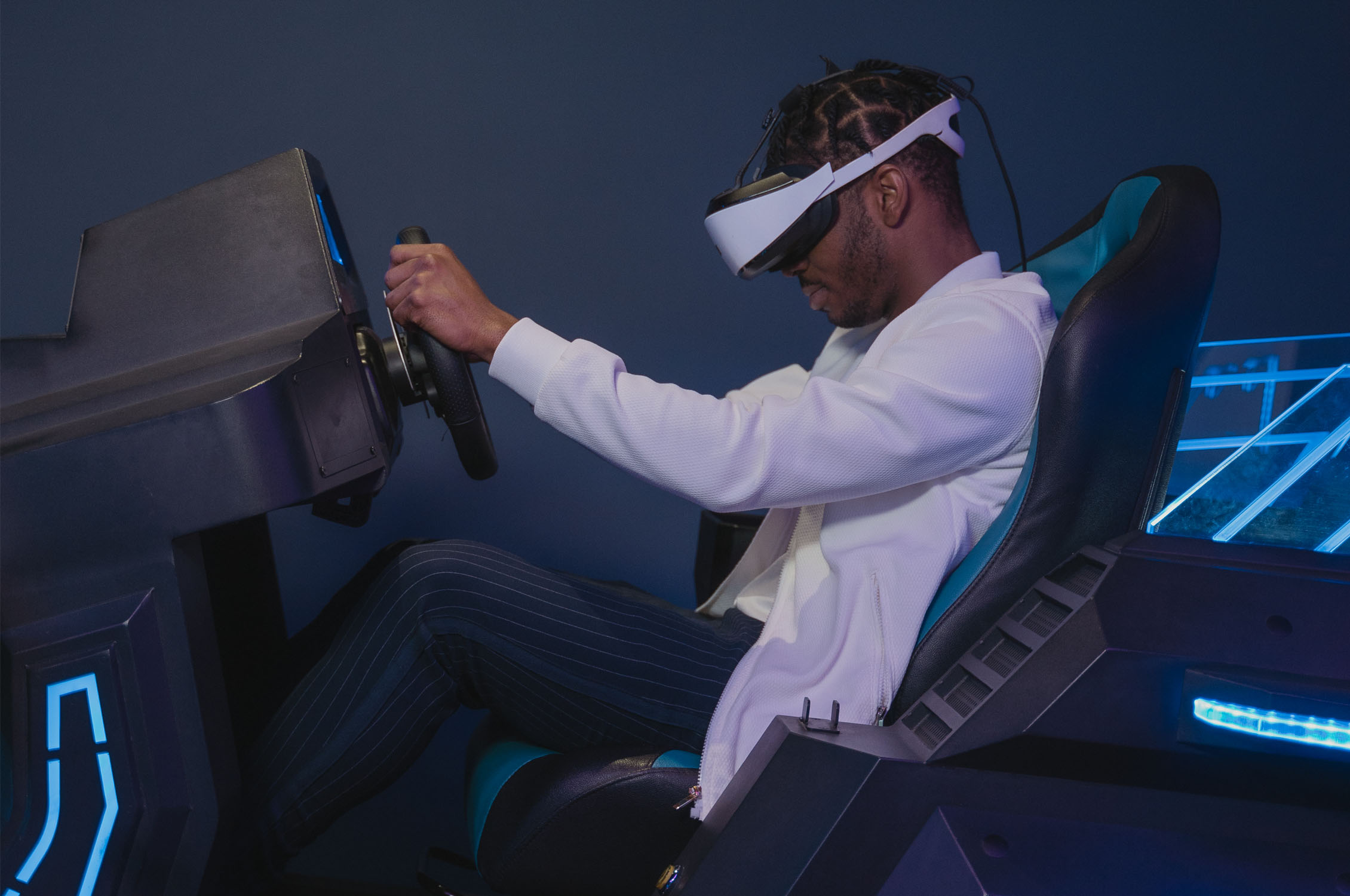

Virtual reality remains the most spectacular addition you can make to a sim-racing setup: having the screens right in front of your eyes, with depth perception and head tracking, radically transforms the racing experience. But you still need to choose the right headset, because not all of them are created equal for sim racing.
To save you time: our top pick is the Pimax Crystal Light, currently the best balance of image quality and price. Below is our selection of the 5 best VR headsets for sim racing in 2026, ranging from high-end to entry-level models. And once you’ve chosen your headset, don’t forget the base that goes with it: check out our best sim racing steering wheels and our ideal Direct Drive setup.
The best VR headsets for Sim Racing at a glance
#1: Pimax Crystal Light
⭐ Rating: 9.8/10
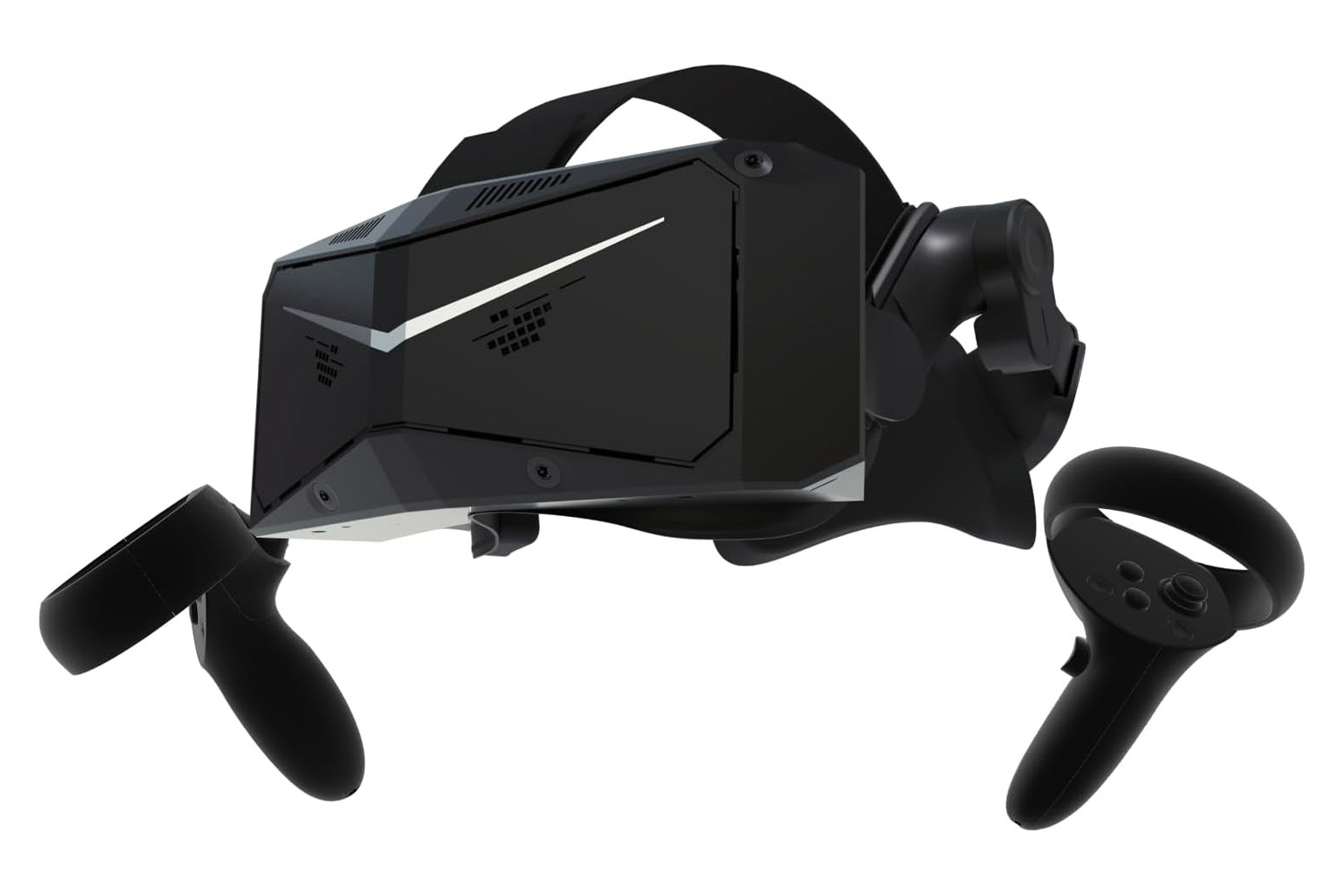
✅ Best sharpness for track playback
“We love its incredible 2880 x 2880 resolution per eye and QLED screen.”
#2: Bigscreen Beyond 2
⭐ Score : 9.6/10
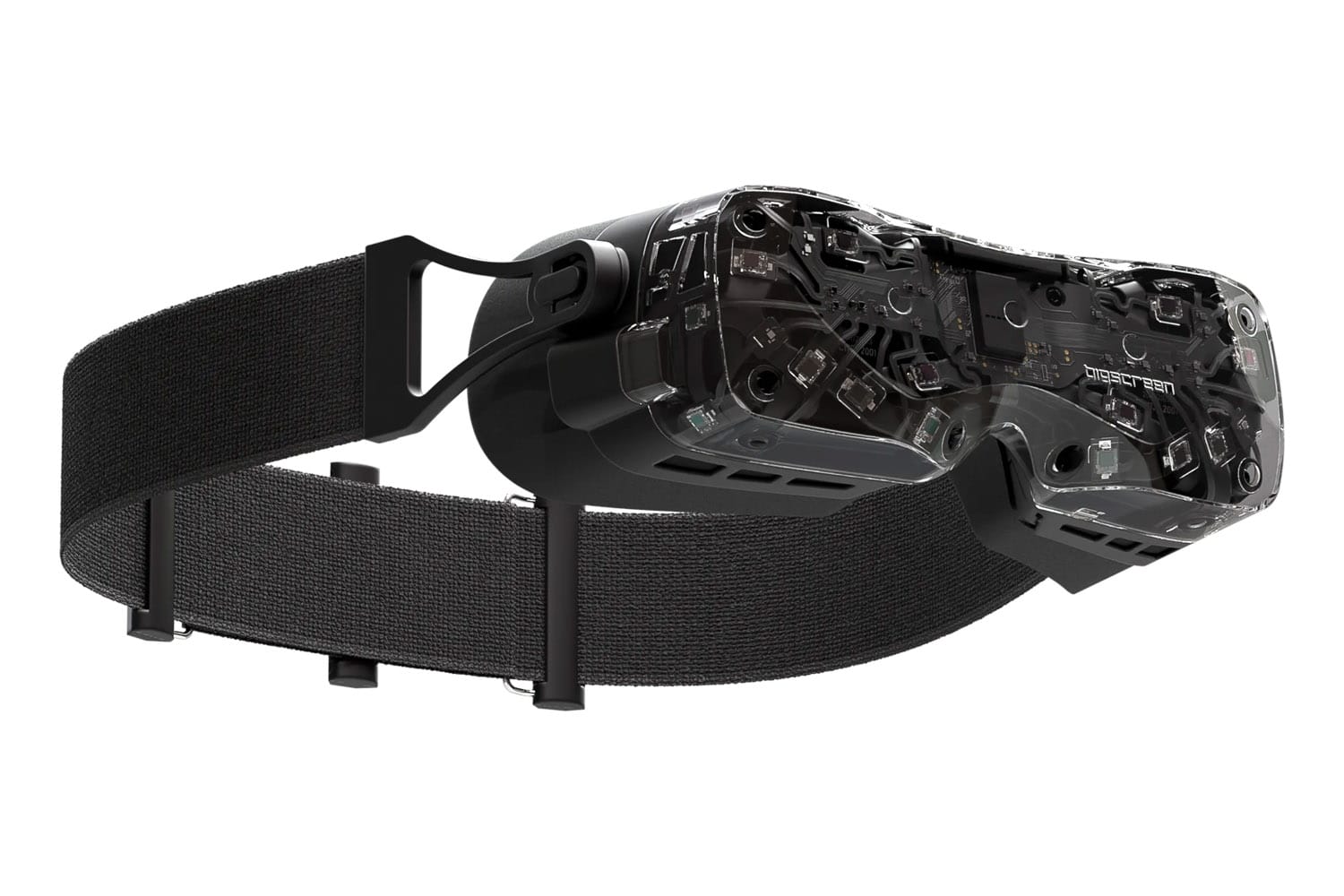
✅ The lightest and most comfortable
“We love its 107 grams, its micro-OLED displays with perfect blacks, and its comfort—you’ll forget you’re even wearing the headset.”
#3: Meta Quest 3
⭐ Score : 9.4/10
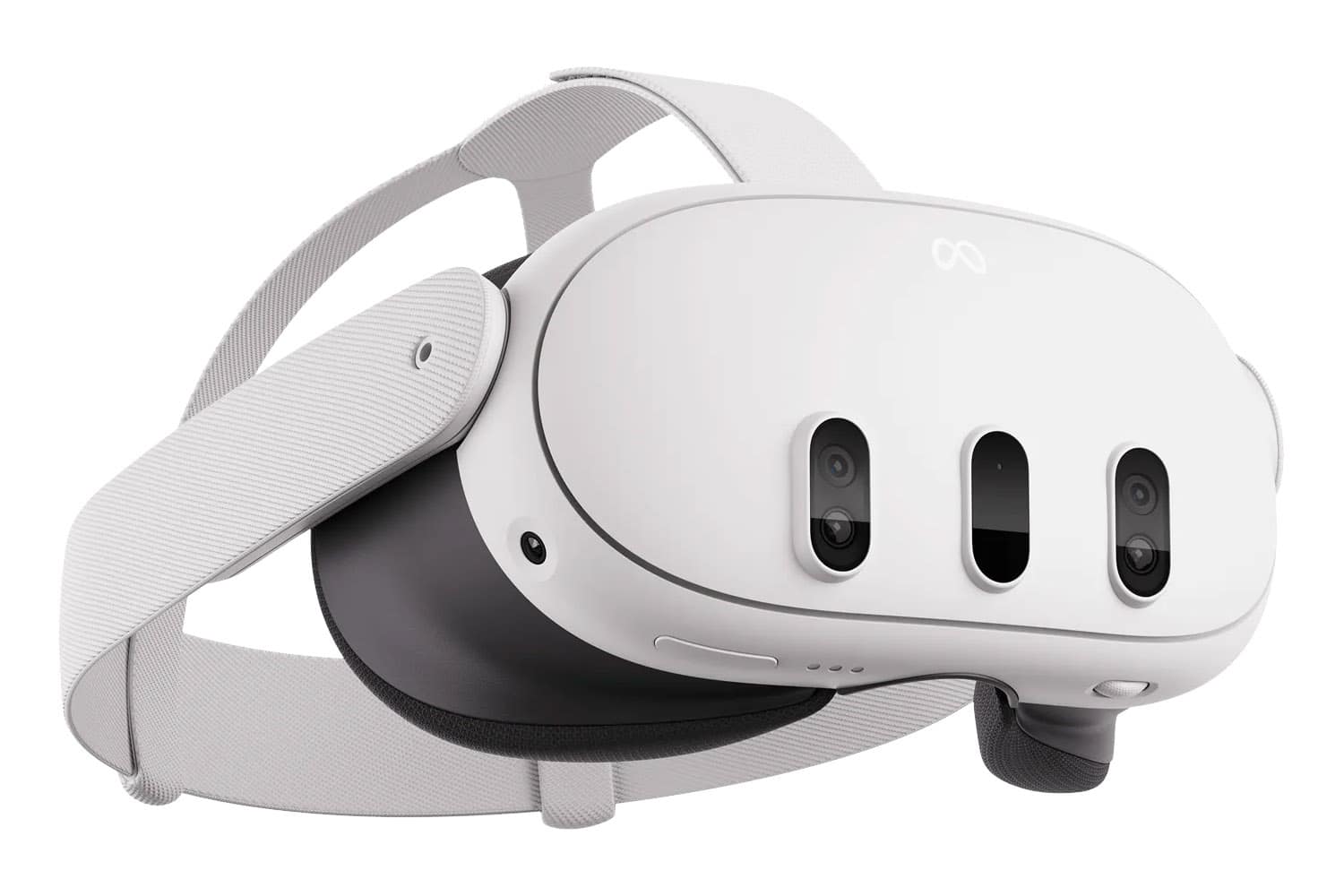
✅ The best value for money
“We love its versatility for both PC and standalone use, its sharp pancake lenses, and its affordable price.”
The 5 best VR headsets for Sim-racing
Here is our selection, ranging from high-end to entry-level.
Pimax Crystal Light
If there’s one helmet in this selection designed primarily for simulation riders, it’s the Pimax Crystal Light. Where most of the models on this list suffer from an image too blurred to read the dashboard or spot the brakes, the Crystal Light solves the problem almost radically, and that’s what earns it our top spot.
With a resolution of 2880 x 2880 pixels per eye and a pixel density of 35 PPD, it’s one of the sharpest displays in our selection, offering the best value for money in terms of image clarity. In practical terms, you can read your HUD in iRacing, make out the rumble strips from a distance in Assetto Corsa Competizione, and spot your braking points well before the sign.
Its QLED screen, coupled with Mini-LED backlighting with local dimming (optional), delivers deep blacks that make all the difference on night races. The whole thing ramps up to 120 Hz to stay sharp in fast-moving sequences.
On the tracking side, four integrated cameras and Pimax’s SLAM algorithm scan the room around you: no need for base stations, just plug in and ride. The helmet remains compatible with a Lighthouse faceplate for those who prefer this system.
And if your budget allows, Pimax also offers the Crystal Super (which appears further down in this ranking): it has even higher resolution and is available in QLED or micro-OLED versions. It’s the same philosophy taken a step further, for gamers with the highest image quality demands. But for the vast majority, the Crystal Light already offers everything you need.
Two reservations remain: it’s a greedy headset (an RTX 3070 or higher is recommended) and its 815 grams feel out of place. If you’ve got the PC to go with it, the Pimax Crystal Light is now our VR reference for sim-racing.
Advantages
- 2880 x 2880 resolution per eye, among the sharpest in the lineup.
- QLED + Mini-LED screen with local dimming, perfect for night-time shopping.
- SLAM tracking without a base station, just plug in and go.
Disadvantages
- Requires a muscular PC configuration.
- A weight of 815 g that can be felt right out of the bucket.
- No eye tracking.
Bigscreen Beyond 2
While the Pimax focuses on clarity, the Bigscreen Beyond 2 focuses on comfort, which is why it takes second place. Weighing in at just 107 grams, it’s by far the lightest headset in this selection: you eventually forget you’re wearing it, even during long endurance sessions.
Its two micro-OLED panels, each with a resolution of 2560 x 2560 pixels per eye, deliver perfect blacks and a level of contrast that no LCD screen can match. On a night scene, the difference is striking. The whole thing runs at 90 Hz to ensure smooth transitions.
The downside to this lightweight design is the ecosystem. The Beyond 2 is a PC-exclusive headset, custom-made (Bigscreen scans your face before manufacturing), and it requires SteamVR base stations, which you’ll need to purchase separately if you don’t already have them. It’s neither the easiest to set up nor the most affordable once you have the full setup.
But for gamers who put in long sessions and want the ultimate in comfort combined with an OLED display, the Beyond 2 is currently unrivaled.
Advantages
- Ultra-lightweight (107 g), the most comfortable option in the selection.
- Micro-OLED displays, perfect blacks, ideal for nighttime use.
- Very sharp image (2560 x 2560 per eye).
Disadvantages
- PC only; base stations are required.
- Custom-made helmet (face scan upon order).
- There’s no standalone version; the cost adds up quickly.
Meta Quest 3
The Meta Quest 3 is the Swiss Army knife of this selection and the most accessible entry point into VR sim racing. Its key advantage: it’s both standalone and PC-compatible, making it the most versatile headset on the list.
In terms of image quality, its 2064 x 2208-pixel panels per eye and pancake lenses deliver very sharp visuals across the entire field of view, without the edge blurring that was common in older headsets. It runs at up to 120 Hz, a real plus for smooth gameplay.
For sim racing, you can connect to your PC via a Link cable, or wirelessly using Air Link and Virtual Desktop if your network can handle it. You then launch iRacing, Assetto Corsa, or Le Mans Ultimate just as you would with any PCVR headset, but with hardware that’s much more affordable than high-end models.
It doesn’t quite match up to a Pimax or a Bigscreen in terms of sheer brightness, but if you want to get started with VR without breaking the bank—or if you’re looking for a standalone headset for other uses—this is the smartest choice.
Advantages
- Versatile: standalone and PC-compatible.
- Excellent value for money.
- Sharp pancake lenses, up to 120 Hz.
Disadvantages
- Not as sharp as a high-end Pimax or Bigscreen.
- The wireless PC connection depends on your network.
- 515 g, about average.
Pimax Crystal Super
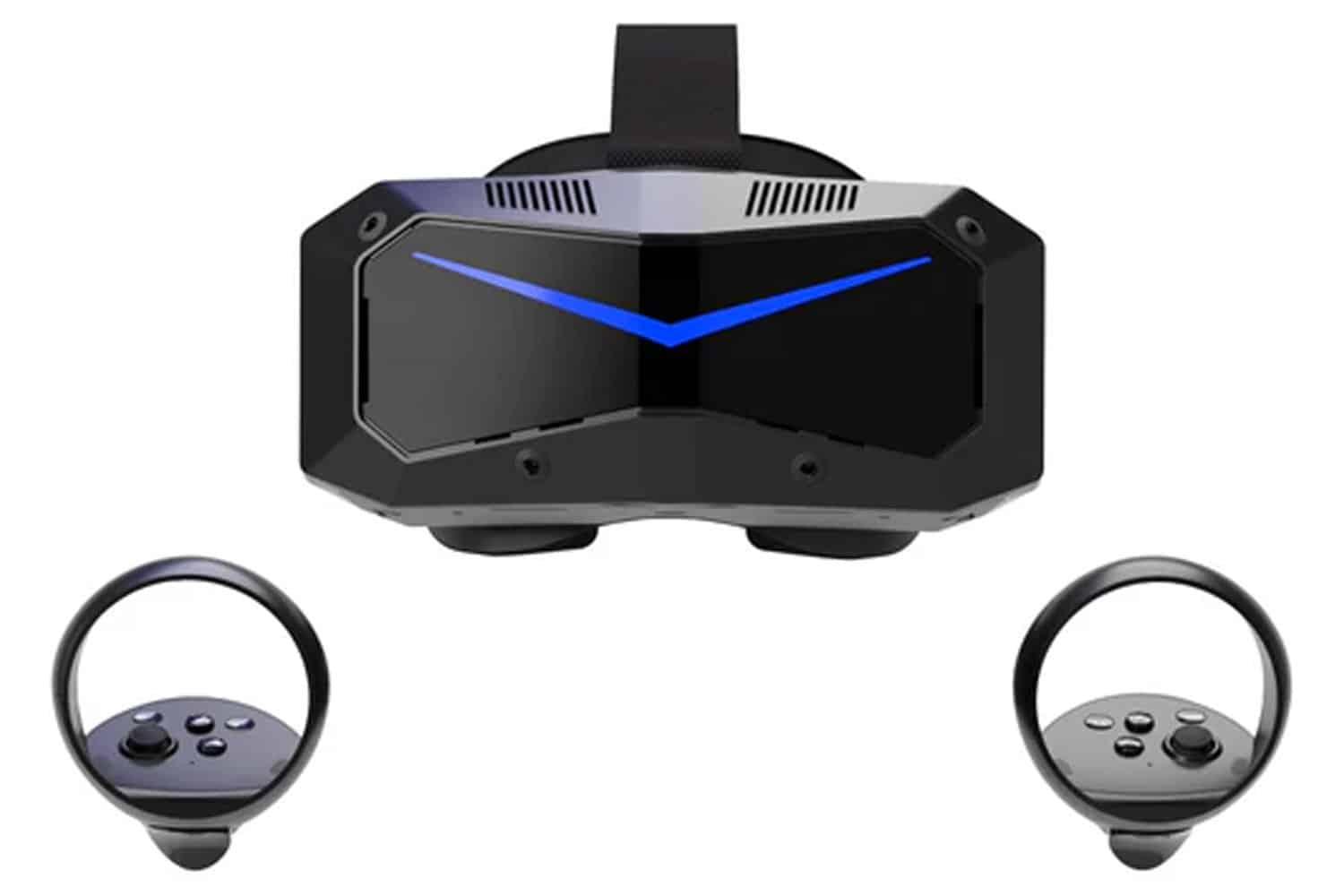
The Pimax Crystal Super is the big brother of the Crystal Light, designed for those who want the best possible image quality and have a PC powerful enough to handle it. It boasts a resolution of 3840 x 3840 pixels per eye, and—most importantly—the Super is modular: you choose your own optical engine. With QLED, that’s 57 PPD (narrow field of view) or 50 PPD (wider field of view, around 127°). And there’s a micro-OLED version that’s a game-changer at night: perfect blacks, eye tracking as a bonus, and a DisplayPort connection for an uncompressed image.
In practical terms, when it comes to reading the gauges, spotting braking points, and making out a competitor in the distance, there’s nothing clearer on the market today. The refresh rate tops out at 90 Hz, which is still sufficient for racing.
The downside, let’s be honest: the QLED version weighs 966 grams with the DMAS earbuds, so you can really feel the weight when you’re on the go (the micro-OLED model weighs under 600 grams). And it’s a resource hog: without a powerful graphics card, you won’t be able to run this resolution without everything running sluggishly.
This is the helmet for the already well-equipped rider who is looking for the ultimate in style—and is willing to pay the high price.
Advantages
- 3840 x 3840 resolution per eye—the sharpest in the lineup.
- Modular display: QLED or micro-OLED with eye-tracking and DisplayPort.
- Perfect blacks on the OLED version.
Disadvantages
- Very heavy in the QLED version (966 g).
- Requires a high-end PC setup.
- The highest price in the selection.
Meta Quest 3S
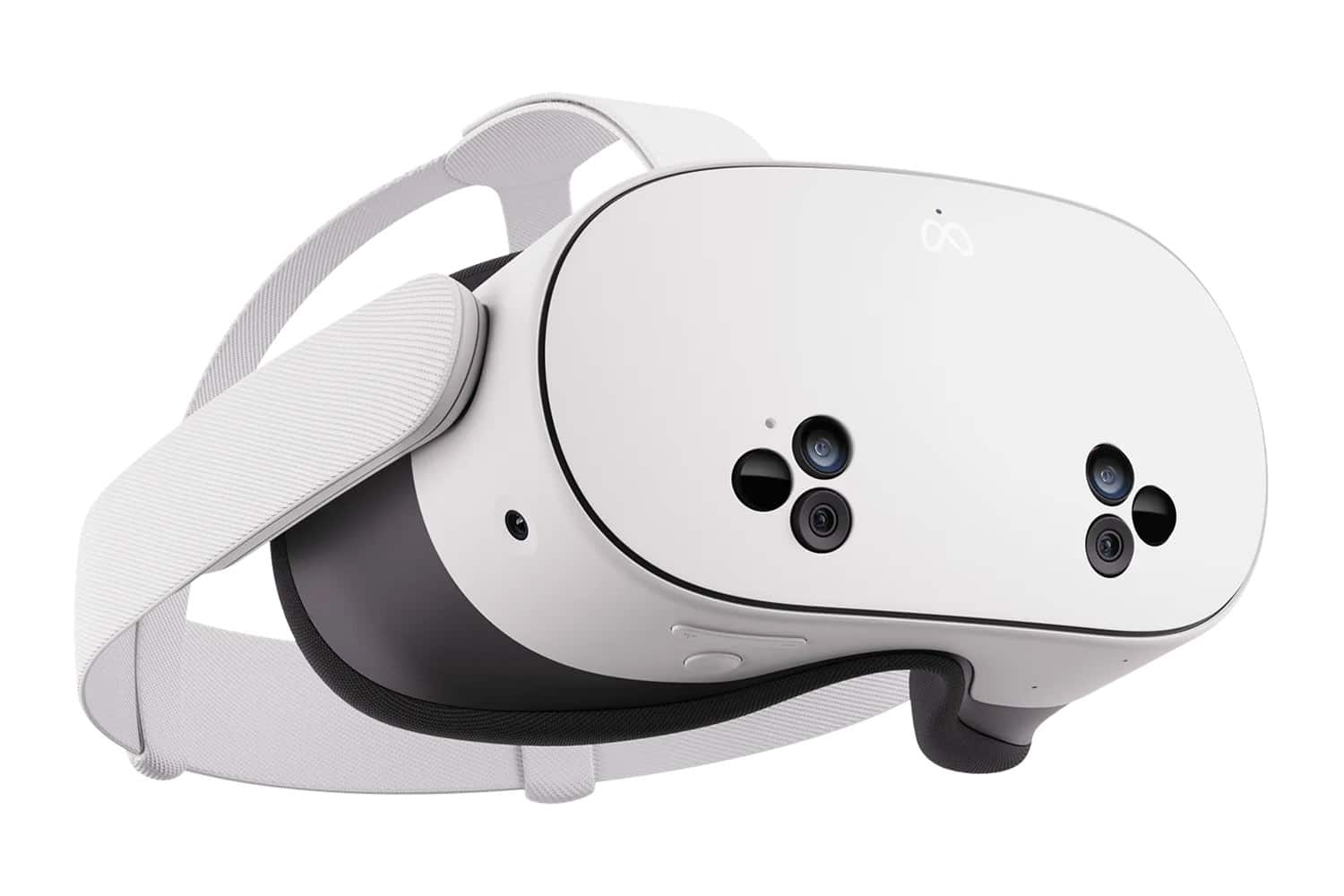
We’ll wrap up with the Meta Quest 3S, the perfect entry-level option for experiencing VR in sim racing without breaking the bank. Priced at around €330, it’s by far the most affordable headset in this selection, and it features the same Snapdragon XR2 Gen 2 chip as the Quest 3.
The trade-off for the price is the image quality. The 3S uses the same Fresnel lenses and 1832 x 1920-pixel resolution per eye as the Quest 2: it’s a step below the Quest 3, with a smaller depth of field. It’s enough to read a dashboard, but don’t expect the sharpness of a Pimax.
Like its bigger sibling, the 3S is both a standalone device and PC-compatible (via Link cable or wirelessly), and supports refresh rates up to 120 Hz. It’s therefore a versatile entry-level option: you can try VR on the standalone console, and plug it into your PC for sim racing whenever you want.
If you’re on a tight budget and just want to get a taste of VR, the Quest 3S is the perfect entry-level option. If you want to take it further, you’ll need to look at higher-end models.
Advantages
- The least expensive option in the selection (~€330).
- Versatile: standalone and PC-compatible.
- Same chip as the Quest 3, up to 120 Hz.
Disadvantages
- Back-projected image (1832 x 1920, Fresnel lenses).
- A smaller depth of field than the Quest 3.
- Not for those who are particular about image quality.
How do I choose a VR headset for sim racing?
Before you make a purchase, here are the key factors that make a difference when choosing a VR racing headset, listed in order of importance.
Inside-out or base stations: which tracking system is best for sim racing?
First, let’s clear up a common misconception: today, all serious headsets use 6DoF (six degrees of freedom), including the five in this selection. 3DoF, which only tracked head rotation, has all but disappeared. And 6DoF is far from being a gimmick in sim-racing: it’s what lets you lean in to read a gauge more closely or glance around the A-pillar in a tight turn. So the real question isn’t the number of DoF, but the type of tracking:inside-out (cameras built into the headset, like on the Quest or via Pimax’s SLAM tracking: nothing to install—just plug in and go) or Lighthouse base stations (like the Bigscreen Beyond: a tad more precise, but they need to be mounted in the room).
What resolution and refresh rate should you aim for?
That’s what sets apart a headset where you can read your HUD from one where everything is blurry. Check the resolution per eye (and the PPD density when available) and the refresh rate: aim for at least 90 Hz, ideally 120 Hz, to maintain sharpness during fast-paced sequences. When it comes to displays, micro-OLED offers perfect blacks that are especially appreciated during night races, whereas LCD/QLED focuses more on brightness.
FOV: Should you look at the horizontal or the vertical?
A wide FOV makes the image look more natural and reduces the “diving mask” effect. But in sim-racing, don’t just look at the horizontal figure: the vertical FOV matters almost as much. It’s what lets you see your steering wheel and gauges when you look down, and anticipate changes in elevation far ahead. A good balance of both is better than a flattering horizontal figure.
What kind of PC setup is needed for VR sim racing?
Don’t underestimate this: VR is one of the most demanding applications out there, since the PC has to render two high-resolution images at a high refresh rate. An RTX 3070 can run iRacing in VR, but it will reach its limits with demanding titles like Le Mans Ultimate or Assetto Corsa Competizione on a high-end headset, where a card like an RTX 4070 Ti or better really comes into its own. You’ll need a solid CPU + GPU combo, not just a high-end graphics card. And be prepared to tweak some software settings (OpenXR, foveated rendering, IPD adjustment via Pimax Play or the Bigscreen app) to get the most out of high-end headsets: it’s not always 100% “plug and play.”
Driver tip: On eye-tracking headsets (the OLED version of the Crystal Super, or the Bigscreen Beyond 2e), Dynamic Foveal Rendering (DFR) —now natively supported by iRacing—focuses processing power where your eye is looking and gains precious frames per second. This is a real advantage when pushing the resolution.
Do comfort and weight really matter?
On long rides, every gram counts. A lightweight, fully adjustable helmet (straps, padding, IPD) makes you forget you’re wearing it and prevents neck strain. That’s the whole point of a model like the Bigscreen Beyond 2, weighing just 107 g, compared to a helmet that weighs over 800 g.
How much should you budget for a good VR headset?
High-end models are clearly superior in terms of immersion, but prices vary widely. There’s no point aiming for the top of the line if your PC can’t keep up: it’s better to have an affordable headset that performs well than a high-end model held back by your hardware. There’s a good choice for every budget in the selection above.
In short: Which VR headset should you choose?
If you had to choose just one, the Pimax Crystal Light remains our top pick for the best balance of image quality and price for most users. For ultimate comfort and OLED, go for the Bigscreen Beyond 2; to get started or play standalone, the Meta Quest 3 is the smart choice; and if budget isn’t an issue and your PC can handle it, the Pimax Crystal Super offers the ultimate visual experience. Whatever you choose, keep in mind the real key to success in VR: a machine that’s up to the task. Even the best headset won’t deliver on a PC that’s underpowered.
Pimax Crystal Light
The best Sim Racing VR headset in 2026
0 Comments