


SimLab is a major player in the sim-racing industry, with products that range from peripherals to cockpits. In fact, SimLab is best known for its cockpits, which are high-quality, customizable, adaptable to virtually all motorsports disciplines, and relatively affordable. In fact, if you opt for the base versions of SimLab’s chassis, the price tag is significantly lower than that of the competition.
SimLab offers a range of cockpits that primarily includes three models, two of which are available in two distinct versions. We have the GT1 chassis, which are the budget-friendly options aimed at beginner and amateur drivers. Then there are the P1X chassis, which are much more focused on performance and customization. And of course, we have an F1 chassis, as SimLab is a partner of the AMG-Petronas racing team.
Today, we’re going to take a look at two of the brand’s cockpits: the GT1 Evo and the P1X Pro. These are two chassis with different design philosophies, but their resemblance is undeniable. Let’s see which drivers these two products are aimed at.
Design and build quality
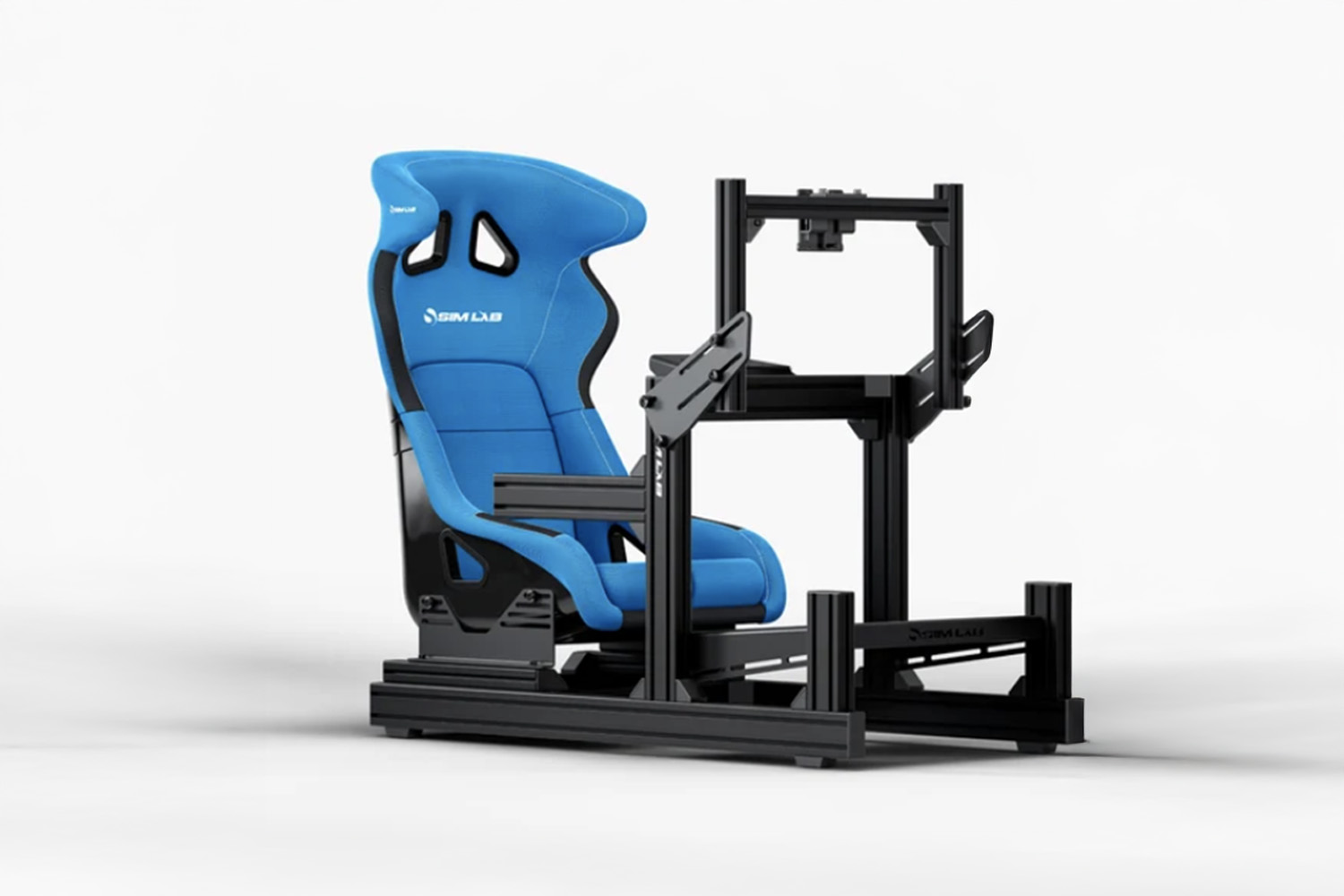
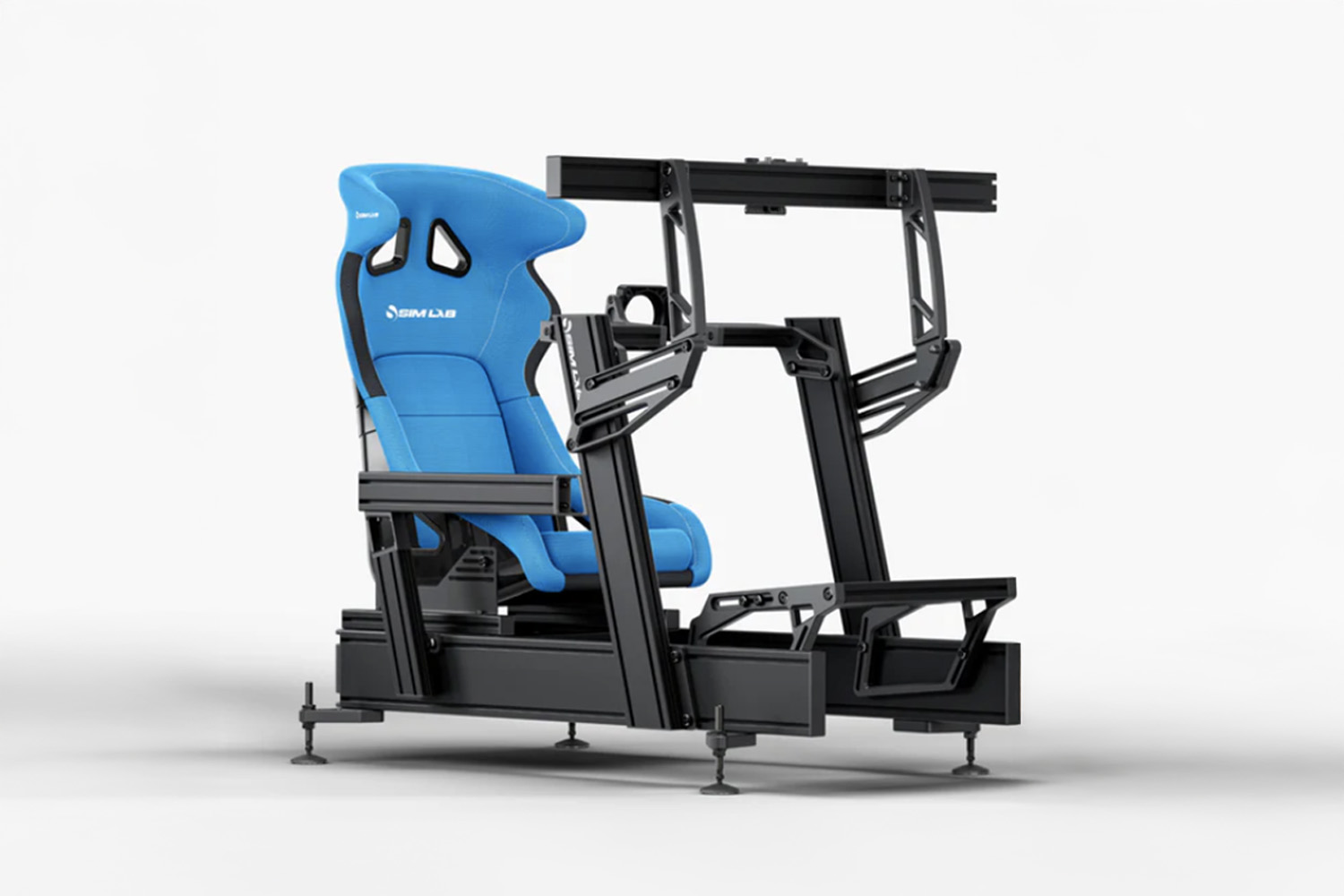
Visually, the GT1 Evo and the P1X Pro are very similar in structure. They’re both tubular frames made of black-painted aluminum tubing. The main visual difference is the size of the tubing. On the GT1 Evo, it’s much smaller, especially on the tubes that make up the lower support, since it’s an entry-level chassis, unlike the P1X Pro, which is at the top of SimLab’s lineup.
Another visual difference is the vertical support on both chassis. On the GT1 Evo, it is straight, while on the P1X Pro it is angled toward the driver, improving ergonomics and the driving position.
In terms of build quality, both products are made with aluminum extrusions for all the parts that make up the frames. This is very high-end, even for the GT1 Evo, which is SimLab’s entry-level cockpit.
The structure is very sturdy, the parts are very well assembled, and the cutouts are made using CNC machines, ensuring excellent build quality across all cockpits. Although SimLab offers products that are less expensive than those of its direct competitors—notably Next Level Racing—the Dutch manufacturer’s chassis are premium and of very high quality.
– 5% off the entire Sim-Lab catalog with the code “SIMMEDIA5”

Customized assembly
As you can imagine, these frames are shipped completely disassembled, and it’s up to you to put them together. Don’t worry—the GT1 Evo and P1X Pro are very easy to assemble, and the manual included with each cockpit is detailed and easy to understand.
For mounting sim-racing peripherals on SimLab chassis, the manufacturer provides several useful components. First, the P1X Pro comes with rail mounts that are compatible with virtually all bucket seats available on the market. The GT1 Evo, on the other hand, offers optional slide rails to keep the base price low. However, both cockpits can be ordered with bucket seats and slide rails from Sparco.
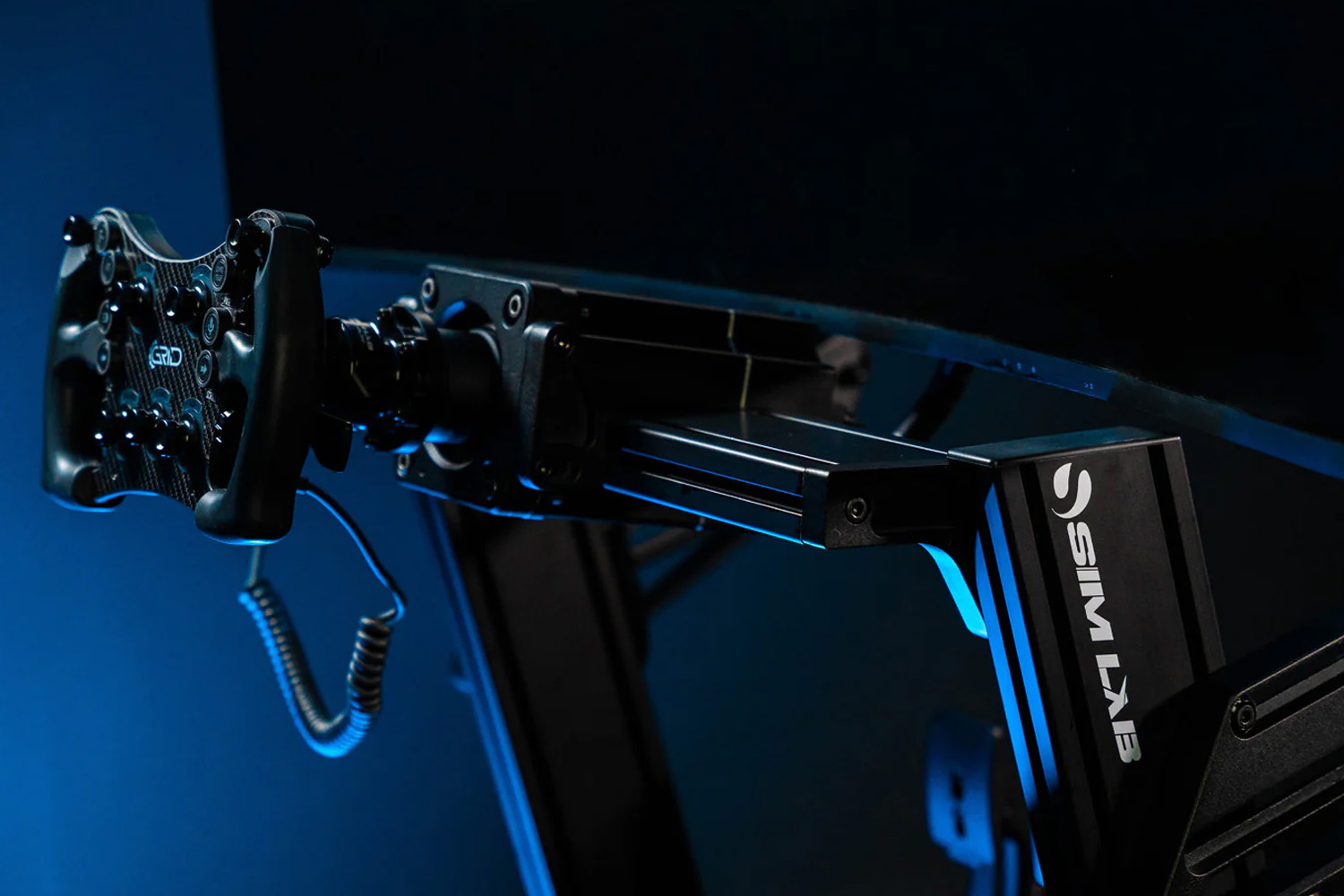
Next, the deck. The P1X Pro offers several mounting options for Direct Drive bases, whether front-mounted or bottom-mounted. The GT1 Evo only offers bottom-mounted installation, which further reflects its budget-friendly design.
And finally, each chassis can be configured with one or more monitor mounts, in addition to theshifter/handbrake mounts that come standard with the GT1 Evo and the P1X Pro. On this last point, not all chassis manufacturers offer these mounts as standard, which further solidifies SimLab’s position as the go-to brand for aluminum-profile cockpits.
Chassis Settings
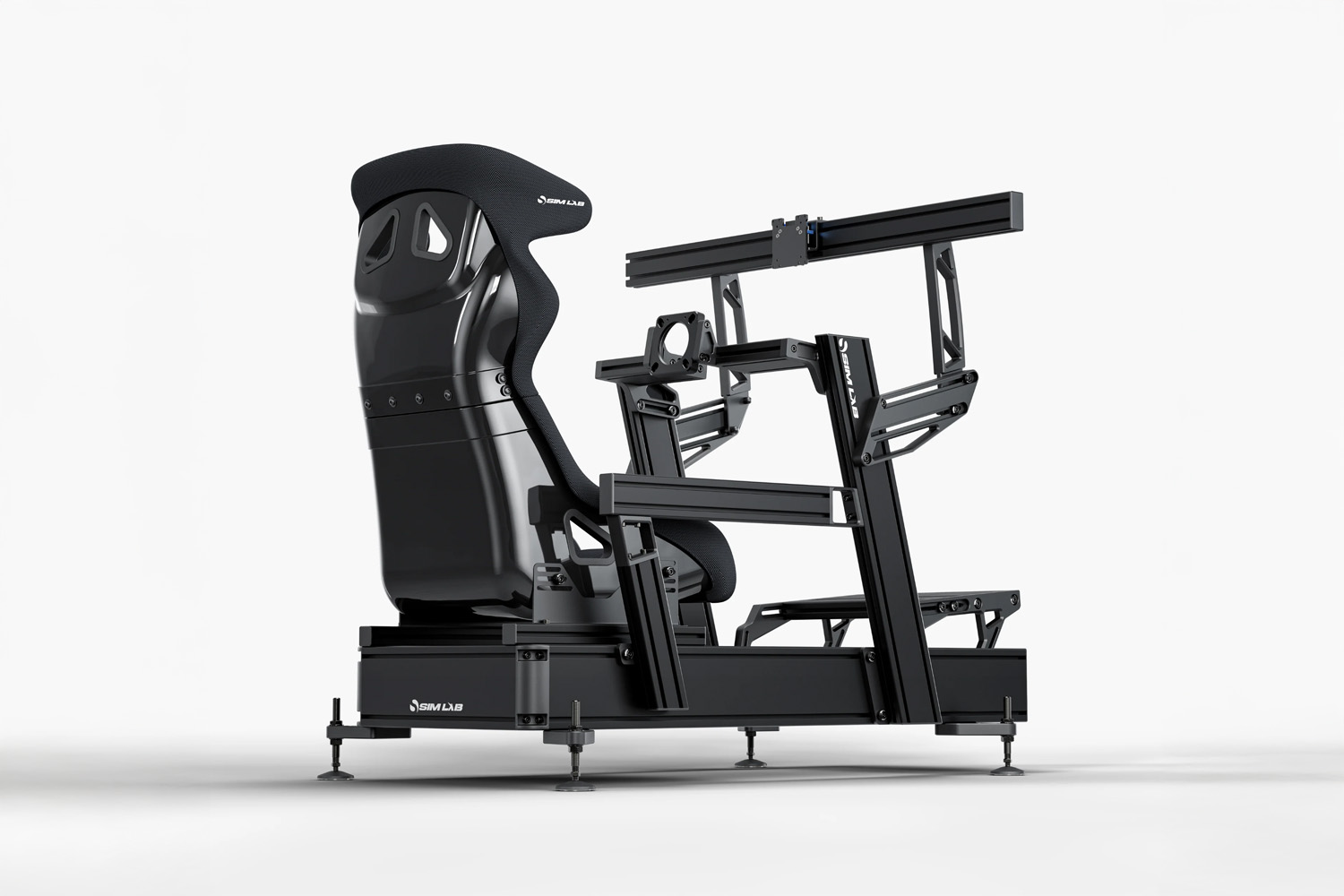
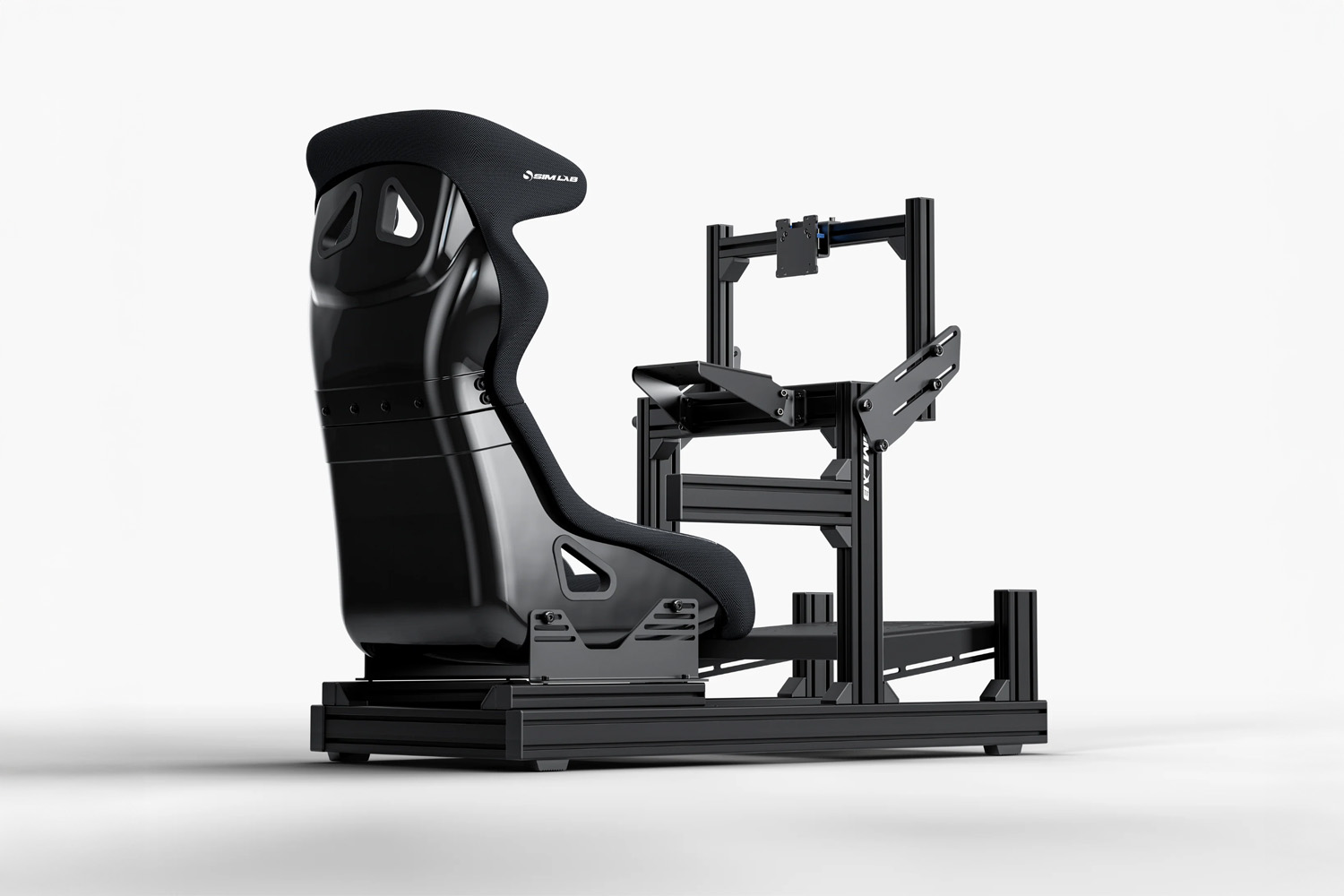
When it comes to frame adjustments, the GT1 Evo and the P1X Pro are very well equipped. You’ll be able to adjust the height and depth of the base deck, the angle and depth of the pedal deck, the space between you and the base mounts, and also the seat slide rails.
As I said, both cockpits offered by SimLab are very comprehensive. That said, the P1X Pro takes the lead here, since the pedal deck can literally be configured however you like. It features a kind of articulated arm system that allows for very advanced adjustments on this mount—something you won’t find on the GT1 Evo, which offers only fairly basic tilt adjustments.
I think it’s perfectly normal for there to be limitations within a company’s lineup of peripherals, since the GT1 Evo shouldn’t be a direct competitor to the P1X Pro. These two cockpits are aimed at audiences that are certainly virtual racers, but whose budget limits differ greatly between the two, as does the driving experience.

Use on the runway
Once you’ve properly set up the GT1 Evo and the P1X Pro, these chassis prove to be formidable in sim racing when it comes to the driving experience—especially the P1X Pro. In terms of configuration, you can transform the P1X Pro into a chassis for GT racing, endurance racing, rally racing (thanks to the side mount for a shifter and handbrake), and Formula racing as well. It’s a true Swiss Army knife that adapts to any situation.
For the GT1 Evo, it’s pretty much the same thing, but toned down a bit. Sure, you’ll be able to set it up for most sim-racing competitions, but its limitations will quickly become apparent. In theory, it’s possible to configure it for F1 races, for example, but the immersion will be less than on the P1X Pro.
Another interesting point worth mentioning about these two cockpits is their stability. The GT1 Evo rests on a rubber block designed to support the entire weight of the chassis and its components. It’s very stable during races, and you won’t notice any flex in the supports that make up the cockpit.
The P1X Pro is different: SimLab’s top-of-the-line model features a set of legs that serve as supports. The brand adopted this design so that its chassis can be converted into an active cockpit if needed.
And if you’re wondering what power limit each one can handle, keep in mind that the GT1 Evo and the P1X Pro support motors with torque exceeding 20 nm—without needing to be plugged in.

Value for money
Let’s move on to the value for money of these two cockpits. First and foremost, SimLab’s peripherals are highly customizable, and prices can range from the basic model to three times that amount—or even more—if you select all the options.
The GT1 Evo starts at around €380 and goes up to over €1,400 if you add the mount for three monitors and a Sparco bucket seat with a slide. For the P1X Pro, it’s the same story: the base price is around €870, and with all the options, it comes to around €1,760. Note that the decks on the P1X Pro aren’t charged per configuration, so they’re included free with purchase.
Personally, I’m in favor of choosing a mid-range chassis to get good value for the money. Make no mistake—the quality is there, but the price goes up pretty quickly.
Which one to choose?
The GT1 Evo and the P1X Pro are designed to appeal to two different groups of sim racers: beginners and casual players, and seasoned virtual racing drivers. Either one is an excellent choice for sim racing, as both chassis are highly customizable and adapt perfectly to any discipline.
If you’re on a tight budget, I recommend the GT1 Evo with a Sparco Grid Q bucket seat. It’ll cost you around €900 and serves as a solid, upgradeable foundation for the future. And if you have no budget constraints, then the P1X Pro with any configuration will work very well, even though the fully loaded GT1 Evo is only €300 cheaper than its bigger brother with the same configuration.
– 5% off the entire Sim-Lab catalog with the code “SIMMEDIA5”






0 Comments