

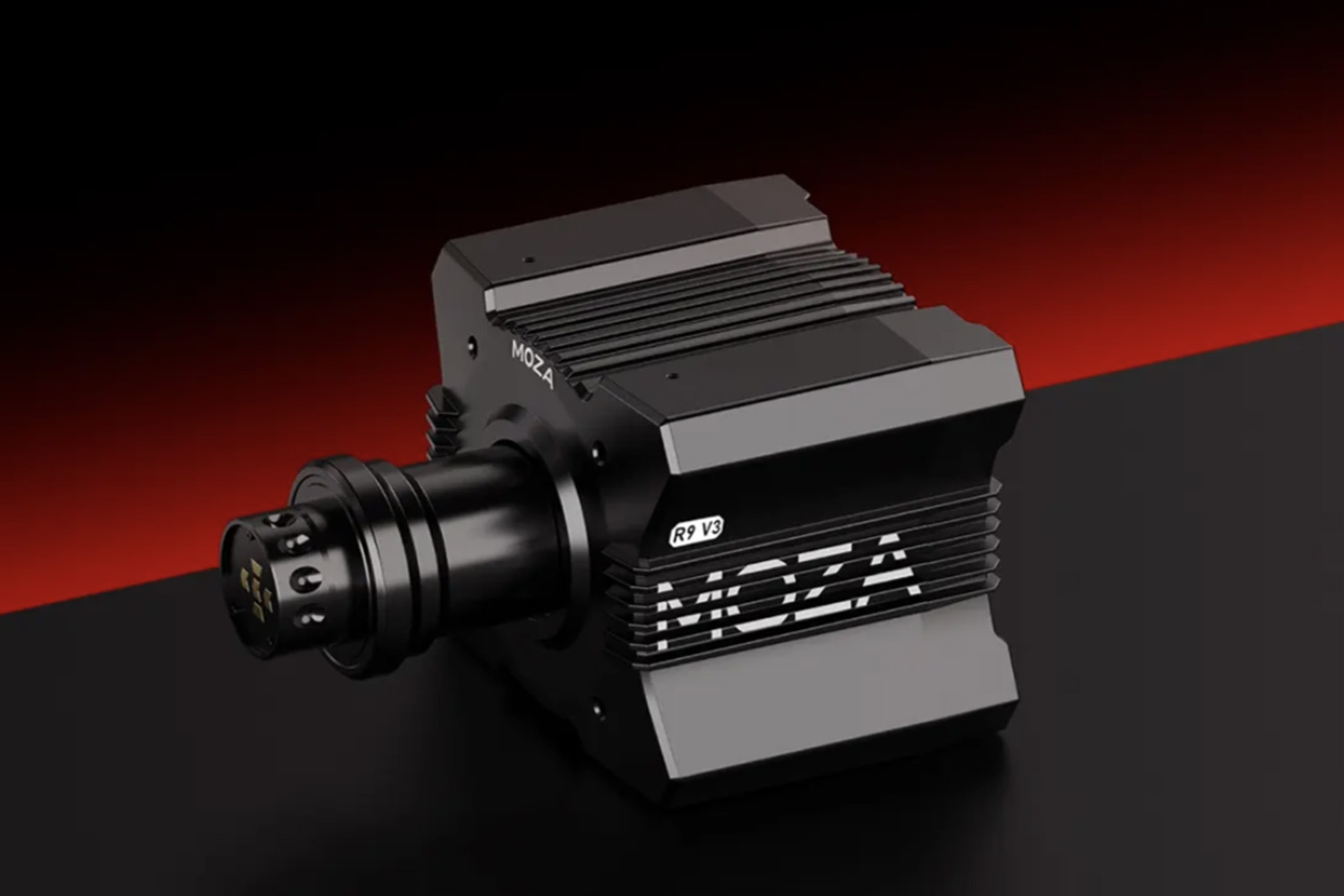
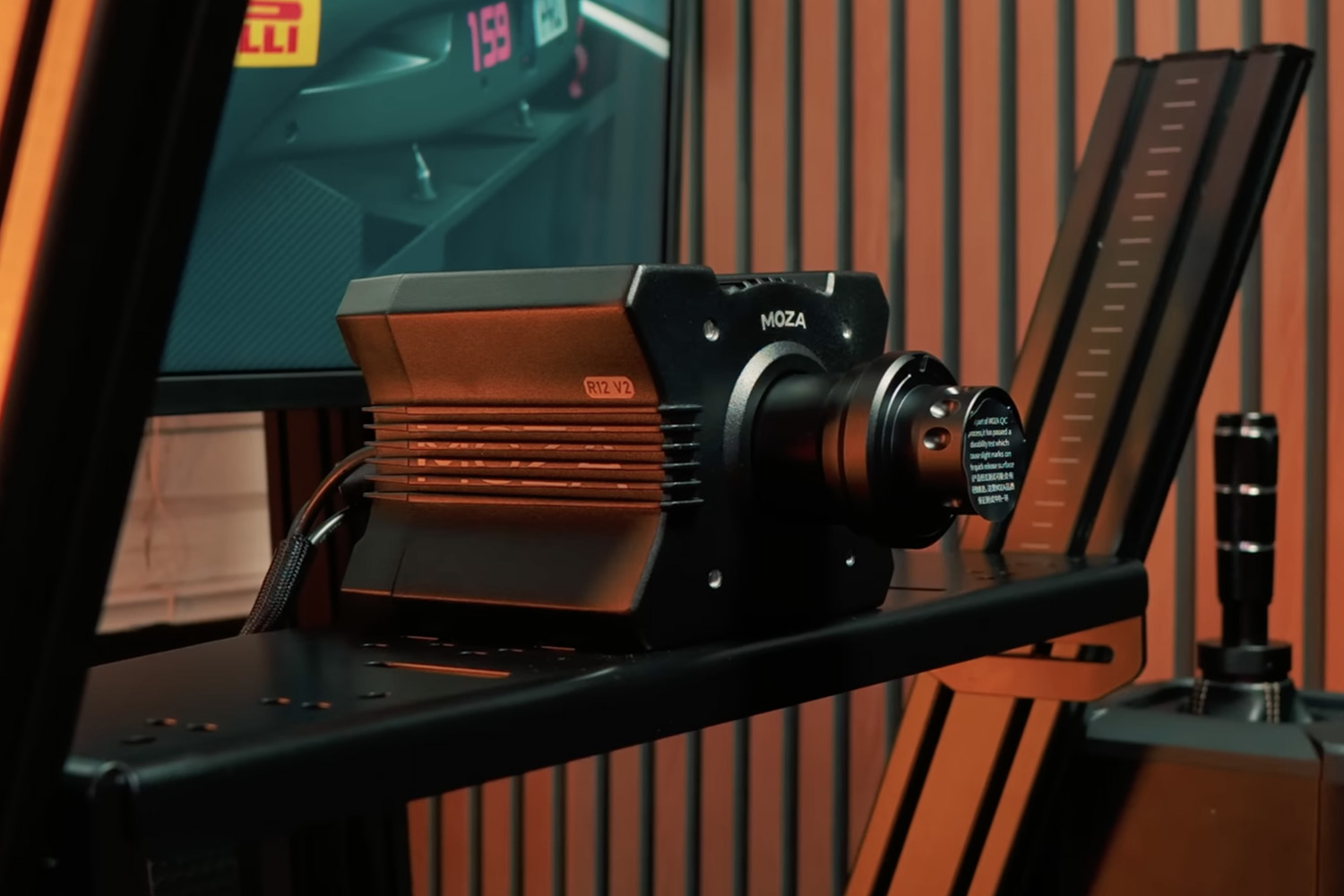
The short answer: no, not for most drivers. The R9 and R12 deliver exactly the same feel; the 3 nm difference only serves to delay the point at which the base frequency saturates. Both clip onto a desk, work with the same steering wheels, and run on the same software. And if you already own an R9, that €120 will go much further toward a pedal set.
Now, there are cases where the R12 is truly justified. Here’s when.
On the track, the only thing that changes is the clipping
Let’s be clear about this: the R9 and the R12 have the same character. Same rendering engine, same level of detail, same feel. Bumps, weight transfer, ABS intervention, light touches—everything is transmitted to your hands the same way on both.
The difference only becomes apparent when you push it. The R9 saturates sooner, and when a channel saturates, it stops transmitting: the effects get clipped at the peak, and you lose the information at the very moment you need it most—that is, at the limit of traction. The R12 pushes that limit back by 3 nm.
In practical terms, it matters if you’re driving a heavy GT3 on iRacing or ACC with the FFB mounted high. It doesn’t matter if you lower the gain so you don’t strain your wrists during a two-hour session—which is what most people do. Many drivers run their R9 at 60 or 70% gain and never experience clipping in their lives. In that case, paying for 3 nm that you won’t use makes no sense.
What remains the same between the two
The rest is interchangeable, and that’s a good thing.
First, assembly—because that’s often the primary concern: both models attach to a desk using the official Moza clamp, which sells for €54.95 and is compatible with the R3, R5, R9, and R12. Neither model requires you to use a cockpit. The only thing to keep in mind is the furniture itself: the harder the base hits, the thicker the tabletop needs to be and the sturdier the legs must be. On a table that wobbles as soon as you lean on it, the R12 will put it to the test, and any vibrations the table absorbs won’t be transmitted to your hands.
The design: X-shaped, black finish, a few fins, and the Moza logo on the sides. The R12 houses a larger motor, so its body is slightly more imposing. Other than that, nothing to report.
Construction: metal frame, separate backplate, front-mounted drive shaft with the company’s proprietary quick-release mechanism. Both are well-built and hold their own against Simagic and Fanatec in this segment.
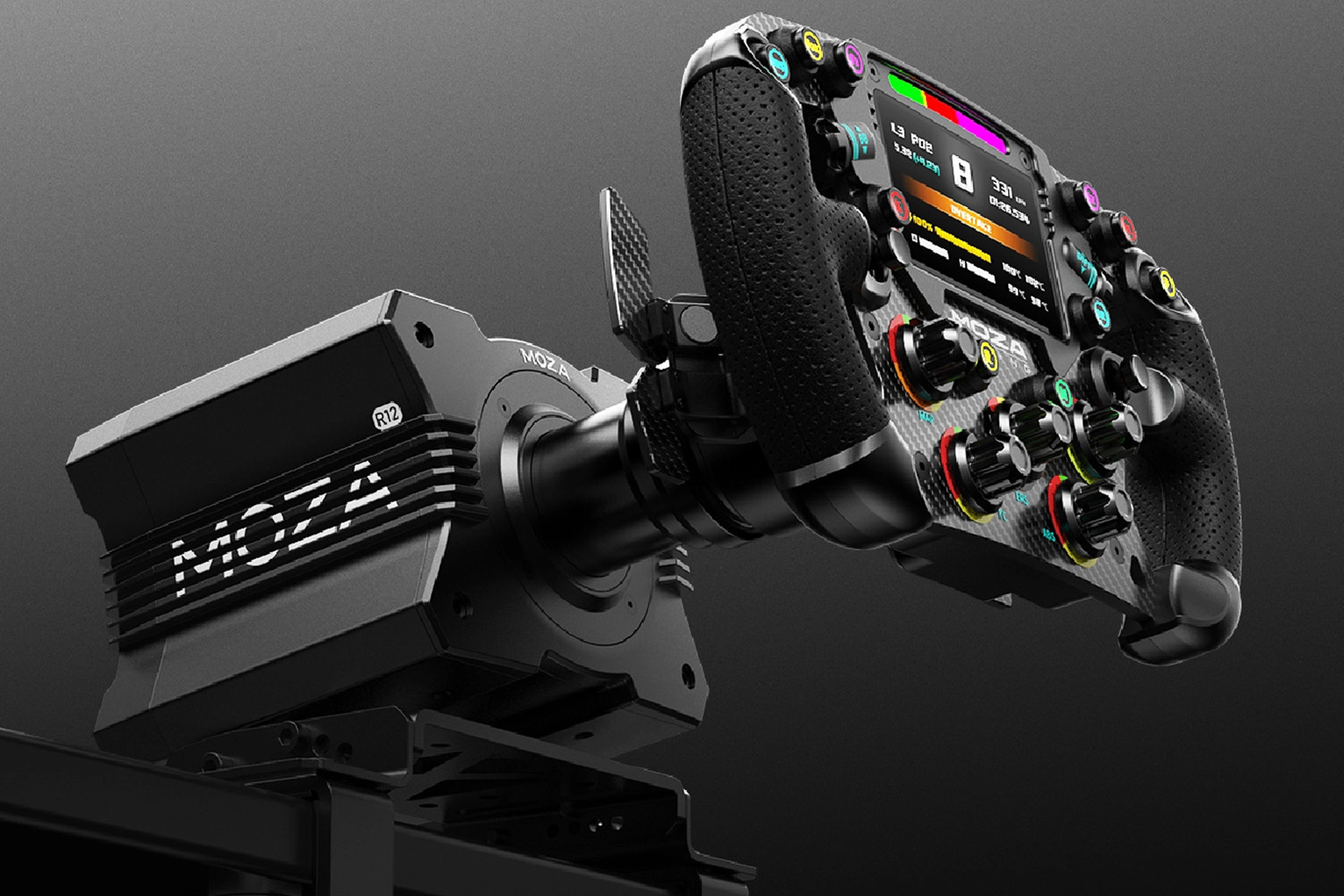
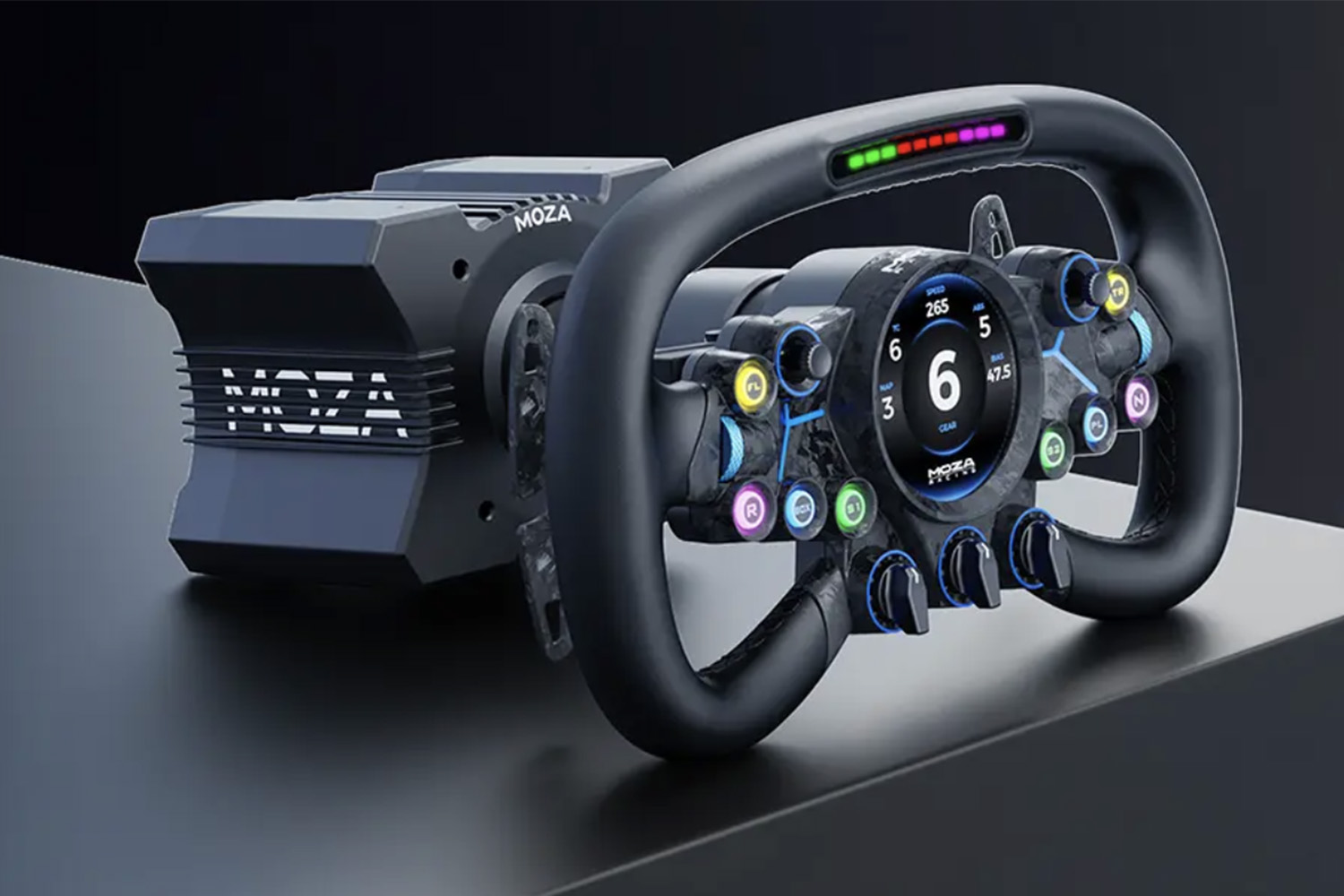
Steering wheels and software: the same wheels in the catalog (GT, touring, Formula, endurance), the same Pit House, the same settings. You don’t have to buy anything new when you switch platforms.
As for platforms, the R9 and R12 are no longer limited to the PC: MOZA states that its ESX steering wheel, licensed by Xbox, allows these two bases to work on Xbox. Expect to pay €159 for the ESX, though regular promotions can lower the price. On the PlayStation side, however, the company is clear: its products do not support either the PS4 or the PS5.
Today’s Prices
For the base model alone, the R9 V3 ranges from €320 to €350, and the R12 V2 starts at around 455 €. The price difference is therefore around 120 to 130 €.
When bundled with a steering wheel, the R9 starts at around €670 and the R12 at around €810.
Should you go for a higher-end model?
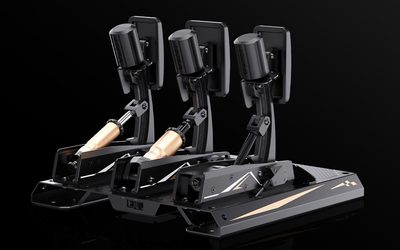
If you’re buying your first base model and driving just for fun, go with the R9 without hesitation. It performs perfectly on iRacing or ACC as long as it’s set up correctly, and the €120 you save can go toward a pedal set, which will give you much more value.
You’re buying your first car knowing that you’re going to drive it a lot. In that case, go for the R12 right away. You’ll be part of the same ecosystem and using the same steering wheels, and you’ll save yourself the hassle of reselling it in two years. The €120 price difference is quickly offset on a purchase of this caliber.
You already have an R9 and are thinking about selling it. Don’t do it. Between the depreciation on resale and the €120 price difference, you’ll end up spending €250 to €300 for a gain you’ll only notice in the last five percent of the FFB. Put that money toward a load-cell crankset—the time savings will be incomparable. Braking saves tenths of a second; an extra 3 nm won’t save any at all.
You’re in a league race, driving a heavy GT3, with boost maxed out. This is the only scenario where the R12 is truly justified, and it’s also the one that will show you why. If you regularly see your R9 hitting its limit on the FFB telemetry, the R12 will make up for what you’re losing.
As for everything else, the R9 remains one of the best values on the market, and upgrading to the R12 is more a matter of peace of mind than a real necessity.
0 Comments