

Fanatec is a major player in the sim-racing industry, with a presence in virtually every segment of racing simulation. With three lines of peripherals, Fanatec offers products for enthusiasts and beginners with the CSL series, experienced racers with the ClubSport series, and professional racers with the Podium series.
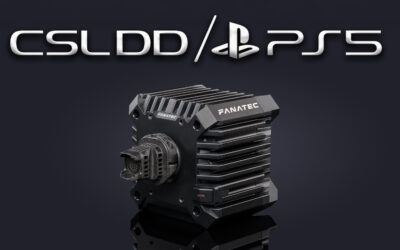
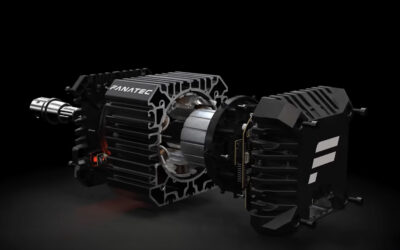
For the CSL series, Fanatec offers one Direct Drive base model to the general public: the CSL DD. This model is available in two power levels: 5 and 8 nm of torque. In reality, only the power supply unit changes to increase the peak torque from 5 to 8 nm. As for everything else, the hardware remains the same.
With so many options available, many pilots ask themselves the following question: Which version should I choose? Should I start with the 5 nm torque model and then move on to the 8 nm torque model? Well, that’s what we’ll explore below.
Sensation on the track
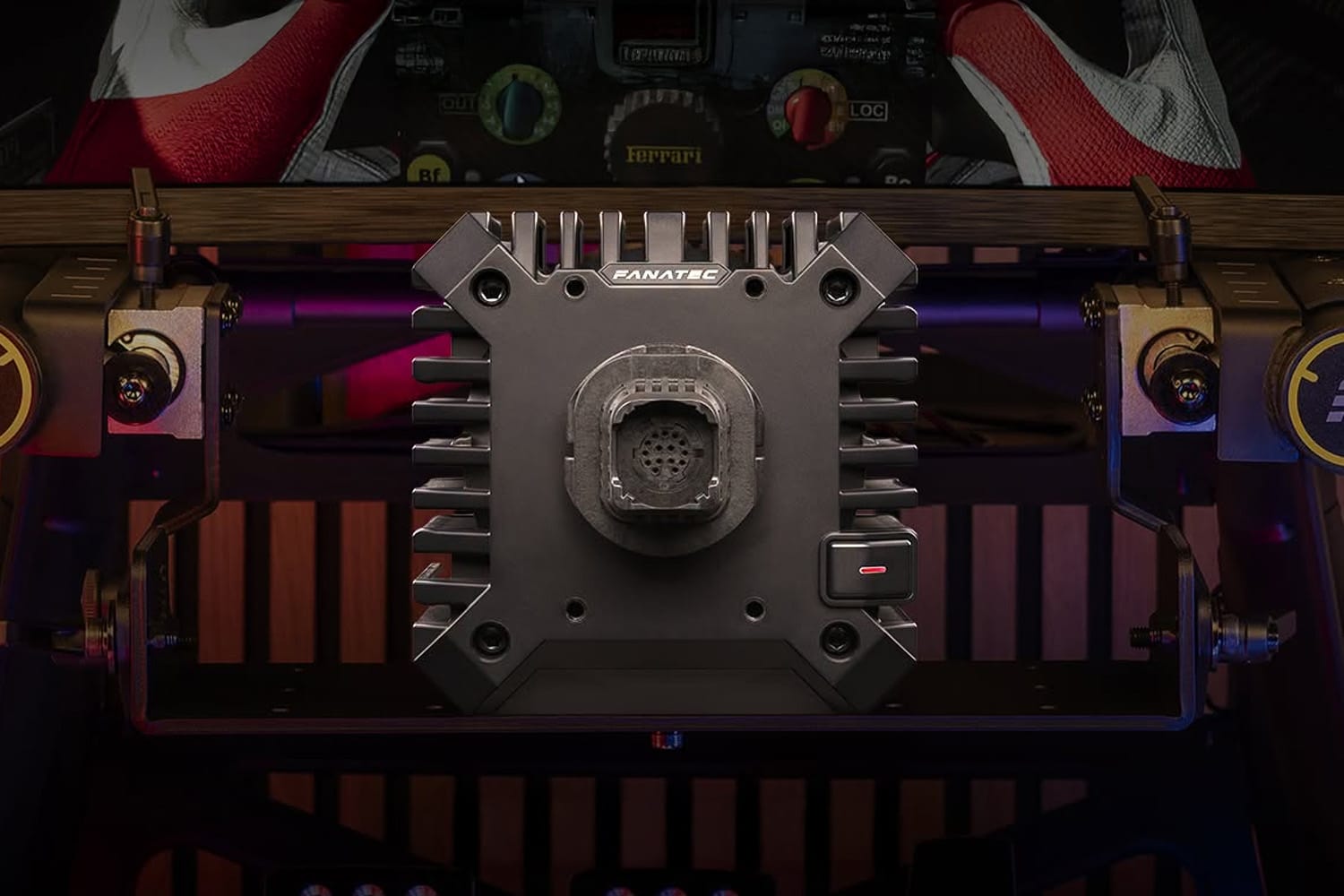
Let’s start with the sensations provided by Fanatec’s CSL DD. For the 5 nm base, the feedback feels realistic, whether it’s light or heavy. Over time, Fanatec has refined the feedback produced by its CSL DD, and sim-racing games now natively integrate it into their code, which further encourages its adoption.
The feedback is rich, with a base that clearly conveys what the car is doing and experiencing. You’ll feel bumps, loss of traction in the front end, ABS interventions, and impacts. However, with its 5 nm of torque, the limits are unfortunately apparent. The base unit can sometimes become overloaded, causing clipping on the steering wheel. This is an inevitable effect when you demand far more than the base unit can produce.
Now let’s move on to the 8 nm CSL DD. Broadly speaking, it works exactly like the 5 nm version, but with higher limits. As a result, you’ll be able to push the base to its limits without experiencing clipping—that is, engine saturation and the resulting blurring effects.
Whether it’s the 5 nm or 8 nm version of the CSL, it’s a staple in sim racing and is loved by many racers. It’s a go-to choice for virtually all beginners and enthusiasts in sim racing, and the driving experience is just one part of the equation, as Fanatec’s product lineup is one of the most comprehensive in racing simulation.
Value for money
Between the 5 nm and 8 nm versions of the CSL, the only difference is the power supply—and the price. The 5 nm version usually costs €329.95, and add €100—for a total of €429.90—to purchase the 8 nm version.
However, Fanatec often offers discounts on products in its catalog, and the CSL can drop to as low as €299.95 for the 5 nm model and €399.95 for the 8 nm model, making both of these bases excellent value for the money.
Which one should I buy?
By offering the same base model in two power variants, Fanatec is targeting different—yet complementary—audiences in sim racing. For beginner drivers, there’s the 5 nm version of the base, which is perfect for racers playing arcade, sim-arcade, and even full simulation titles.
It’s packed with power, offers a granular feel, and the chassis responds perfectly to the driver’s input. It’s the perfect choice for those looking to take their first lap in sim racing and gradually work their way up the podium.
For the 8 nm version, the recipe remains virtually unchanged, with only higher limits. You’ll be able to enjoy it in sim racing titles without compromising on the driving experience. The 8 nm CSL DD is a great starting point for drivers with solid sim racing experience who aren’t quite ready to make the leap to 10 nm.
And in any case, you can also buy the 5 nm version of the CSL DD, enjoy it for a while, and then get the power kit and upgrade to 8 nm when you’re ready.

0 Comments