
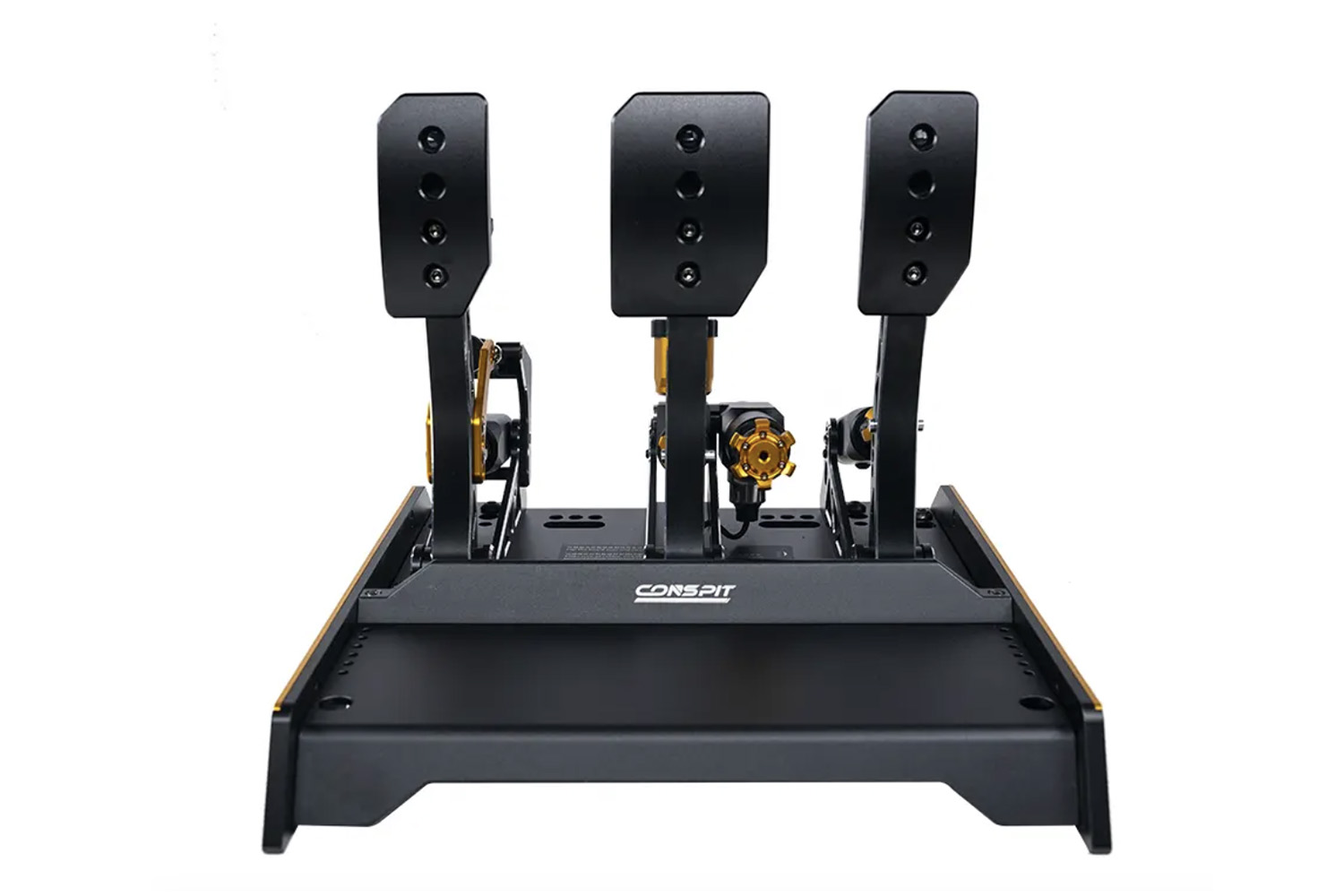

Conspit CPP EVO 3
Benefits
- Hydraulic crankset
- Available with 2 or 3 pedals
- Comprehensive settings and premium build quality
Disadvantages
- PC compatible only
Our rating : 9.7/10
Conspit is in full attack mode on the world sim-racing market with a range that includes literally everything in racing simulation. We’re talking DD bases, steering wheels, cockpits and chassis, handbrakes, dashboards, pedals and more.
The manufacturer is young, but has built up a lot of momentum, as has been the case with Moza Racing and Simagic.
Among the peripherals available for purchase from Conspit, we have the top-of-the-range CPP Evo 3 crankset. This is a product with a hydraulic brake pedal that can handle up to 200 bar of pressure.
Main features and technical specifications of the crankset
- Entire structure in aluminum alloy machined by CNC machines
- Hydraulic brake system, max. 200 bar
- PC compatible only
- Available in 2- and 3-pedal versions, with clutch sold separately as an add-on
- Compatible with SimHub and Conspit Link
- Integrated vibration system on each pedal
- Multi-adjustable pedals for resistance, axle, inclination, etc.
- Non-linear clutch pedal thanks to a tilting system
- Black anodized paint on the entire device, with gold accents on some product elements
- Hall sensors on gas pedal and clutch
Design
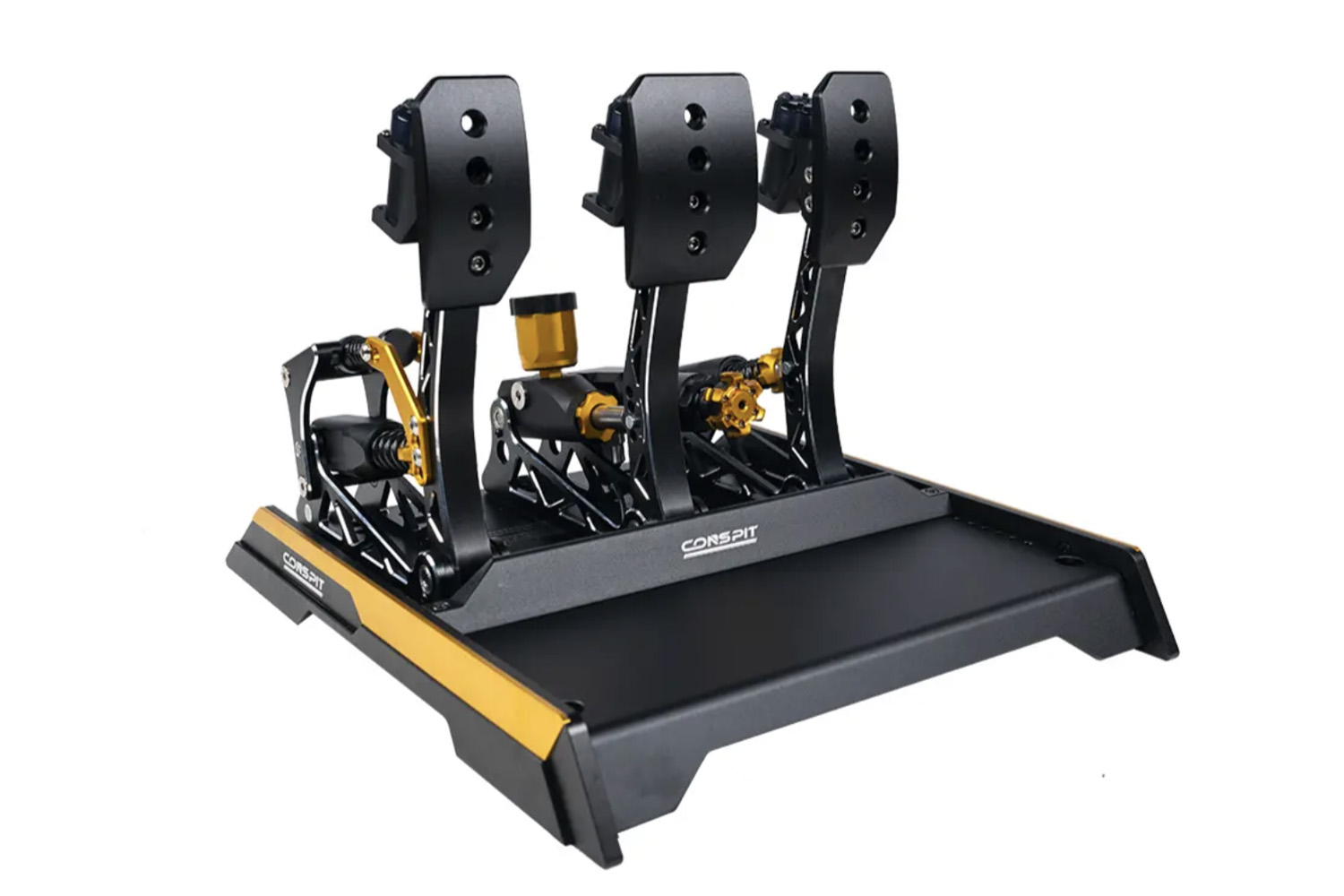
If you’ve seen Conspit’s pedalboards before, the CPP Evo 3 looks very similar to the brand’s others, with the only big change being the device’s colors.
The CPP Evo 3 is entirely black, with gold on the resistance system elements and the support plate. The 3 pedals are identical in structure, but the pedal plates differ.
Once again, Conspit offers us a visually pleasing product that should go well with any sim-racing setup.
Customized assembly
Conspit’s CPP Evo 3 can be mounted in two ways: using the support plate, or by attaching the pedals directly to the cockpit. If you take the first route, you have several mounting points for the pedals, with lateral and depth movements, as well as the option of reducing the size of the footrest.
For direct chassis mounting, each pedal is independent, so there’s no position limit if you go this route. The CPP Evo 3 box includes everything you need to mount the pedals, from screws to wrenches.

Manufacturing and finishing
The CPP Evo 3 uses 6061-T6 aluminum alloy for the entire structure, and this material is CNC-machined. Unlike the CPP Lite, which includes plastic elements, notably part of the support plate, the CPP Evo 3 uses metal exclusively for its structure, and on all parts making up the pedals.
The build quality is on a par with that of Fanatec’s ClubSport range, and even Podium to some extent. It’s very well made, premium, assembled to perfection and very handsome.
This top-of-the-range pedalboard from Conspit is superbly well finished, with rounded edges, parts assembled to the millimeter, and perfect, even paintwork on all parts. The brand is clearly targeting Simagic and Fanatec, and isn’t afraid to take them on on their own turf.
Bottom bracket adjustment
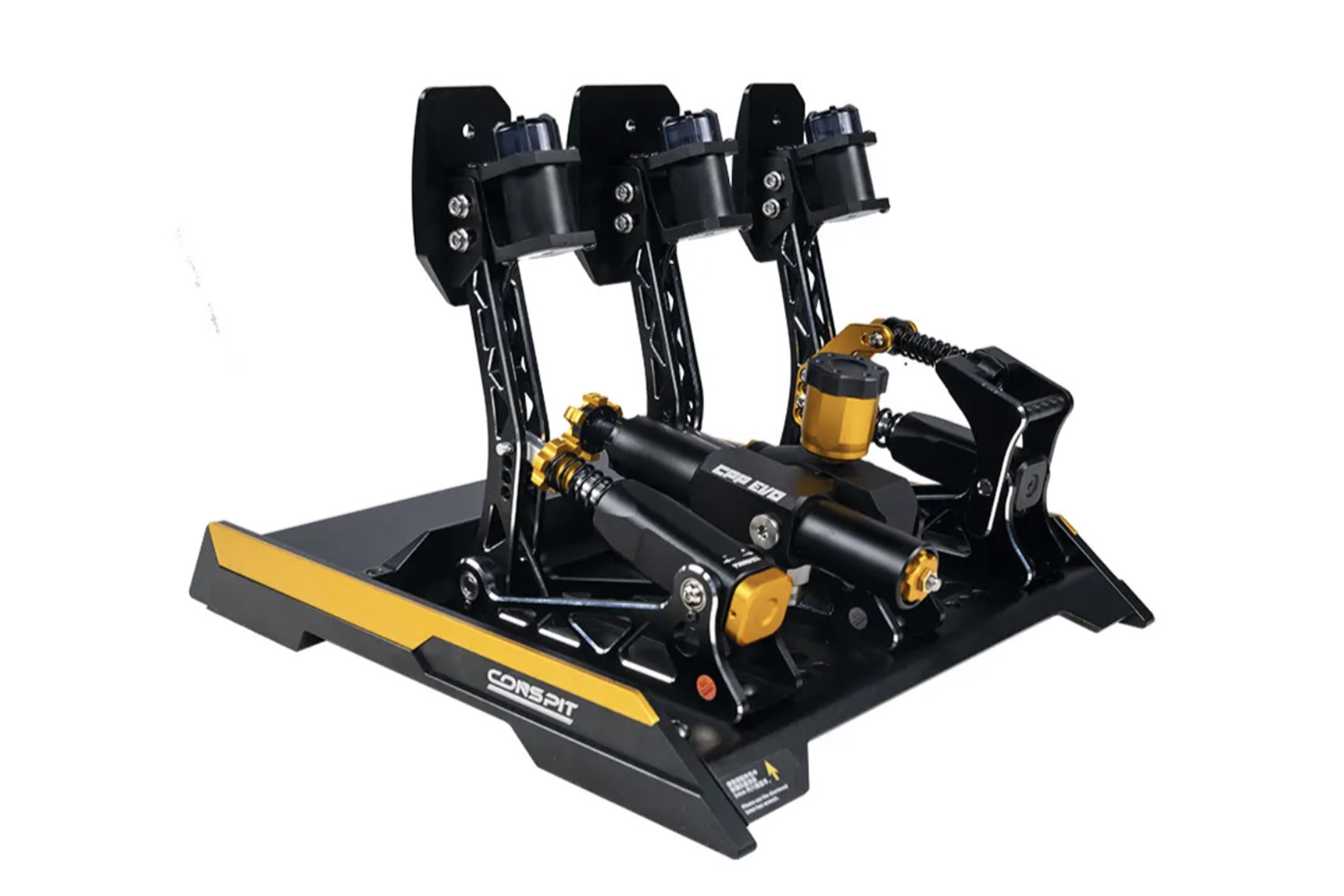
In addition to pedal placement, the CPP Evo 3 offers a whole host of adjustments. The pedal plate can be raised or lowered in several positions, while its inclination can be modified. Speaking of inclination, the pedals can be adjusted to 4 different positions, all of which influence the feel of the pedals. And since each pedal has its own vibrating motor, its feedback can be adjusted via software.
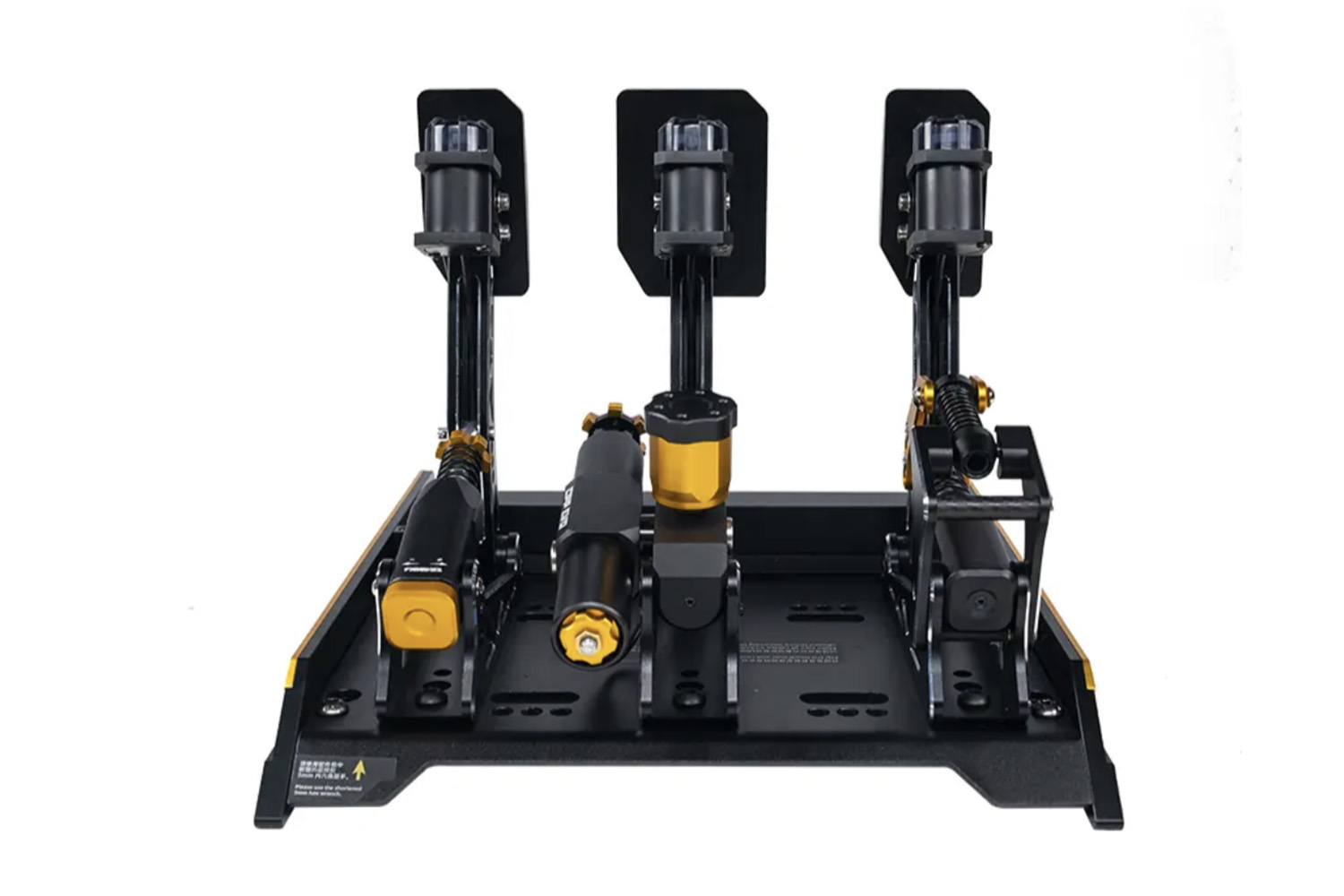
For resistance systems, it’s all the same. You have knobs on each pedal that allow you to alter the feel of the pedal. Tightening the throttle knob, for example, makes it less supple. And in the same vein, the hydraulic system modifies the resistance of the brake pedal, and just like on the CPP Lite, there’s an elastomer to control pedal preload. But the biggest change between the CPP Evo 3 and the Lite is that you can swap elastomers.
Conspit’s CPP Evo 3 is a very complete crankset in terms of the settings available to riders.

Sensations during play
The gas pedal uses a Hall sensor, as does the clutch, for pedal input. On top of that, there’s a spring mechanism that plays the role of resistance in the equation. All this to say that the CPP Evo 3’s gas pedal is a linear pedal for racing use, smooth and very precise.
The same can be said for the clutch pedal, which is flexible, easy to use and very precise. I know that the 3-pedal version won’t be adopted by many racers, if only to save money, but you should know that it’s very precise when sim-racing.
For the CPP Evo 3 brake, the pedal is basically on two phases: you have the preload or compression of the elastomer which plays the role of initial pedal stroke with a linear and natural feel under your foot. Depending on the elastomer you install, you have a certain amount of control over pedal travel, which can be very interesting depending on the sim-racing discipline.
Once the pedal has been depressed, it must return to its initial position, and this is where the hydraulic system comes into play. The pedal returns naturally to its top position, without the jerkiness you’d find on a spring-loaded Load Cell, for example. The CPP Evo 3’s brake is simply excellent, because in terms of feedback, it’s the closest thing to what you feel on a car, and I love it.
A quick point about the vibrators: they’re integrated into the very structure of the pedals, which facilitates the transmission of information. I think this is a great addition to a crankset like the CPP Evo 3, as it adds a significant plus in terms of feel.
Compatibility
The CPP Evo 3 is only compatible with PCs running Windows, and the brand doesn’t really seem to be interested in consoles.
As far as software is concerned, the CPP Evo 3 is supported by Conspit Link naturally, but also by SimHub, which is a sure bet in sim-racing.
Value for money
The CPP Evo 3 costs around €800-900, with or without clutch.
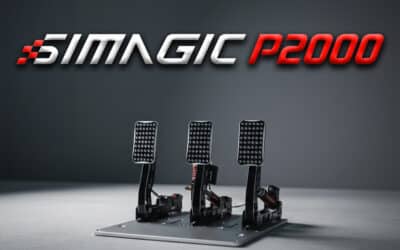
The value for money of this Conspit pedalboard is very good as far as I’m concerned. So yes, it’s more expensive than a Simagic P2000, but you get more for your money at the same time, especially the built-in vibrators. The CPP Evo 3 is a quality device, very well made and holding its own against brands with more experience in the game.
My verdict
As was the case with Moza and Simagic, Conspit has rapidly nibbled away at sim-racing market share worldwide. The brand offers quality peripherals across a broad spectrum of ranges, aiming to satisfy as many virtual pilots as possible.
If you’re looking for a hydraulic crankset for under €900, I can recommend the CPP Evo 3. It’s a veritable wellspring of sensations on the track. My hat’s off to Conspit.
Conspit CPP EVO 3
Hydraulic immersion at its best
0 Comments