
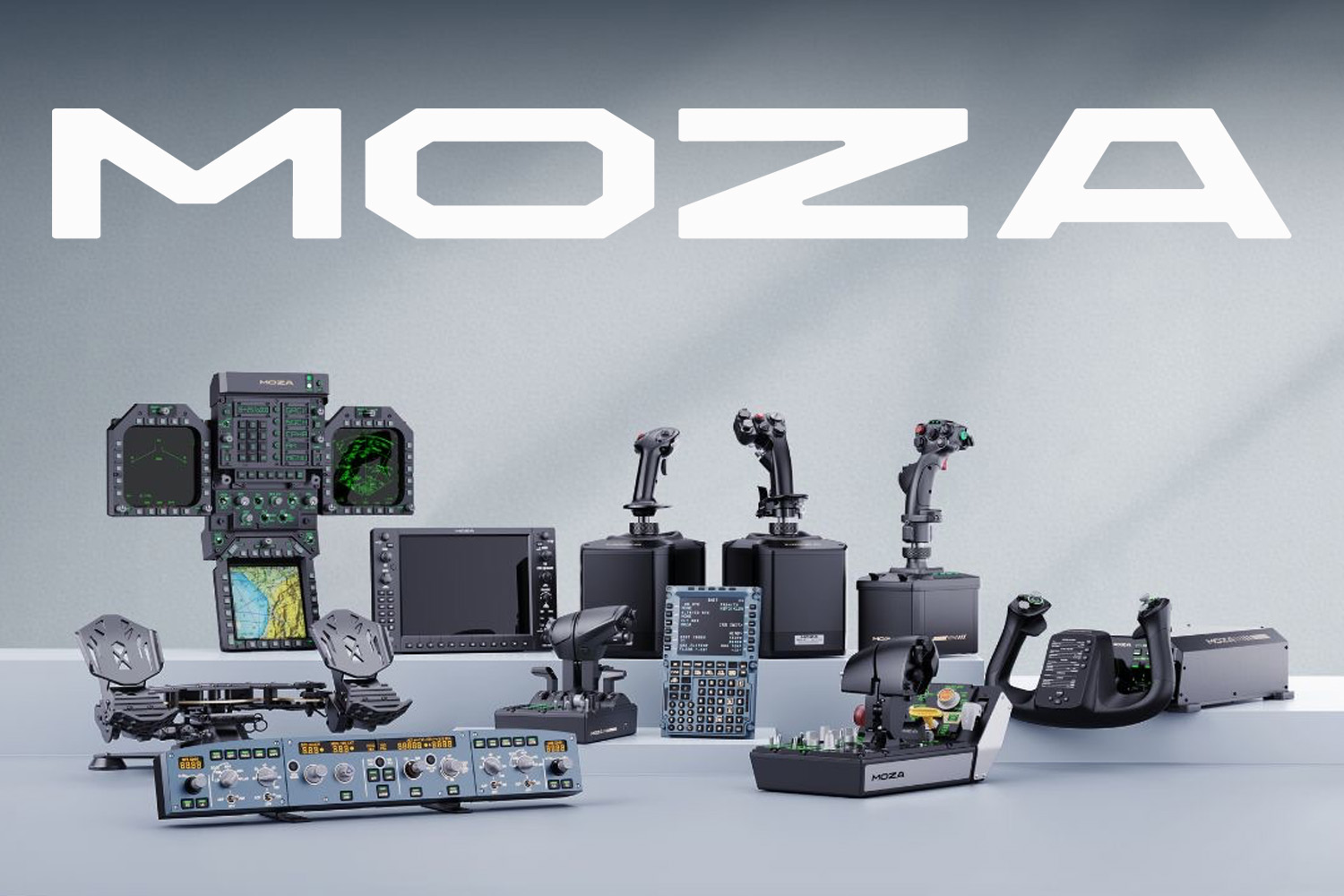

Already a presence in flight simulation with its force-feedback controls, MOZA is taking things to the next level. Under the MOZA Flight banner—a division of MOZA Racing—the brand is unveiling a full range of displays, avionics panels, and electronic modules to complement its controllers. The idea: to go beyond just controls and provide everything needed to equip an entire cockpit—screen by screen and panel by panel—for commercial, general, and military aviation, as well as for hobbyists building their own home-made cockpits.
A complete line of screens and panels
This lineup features five new products, with prices ranging widely:
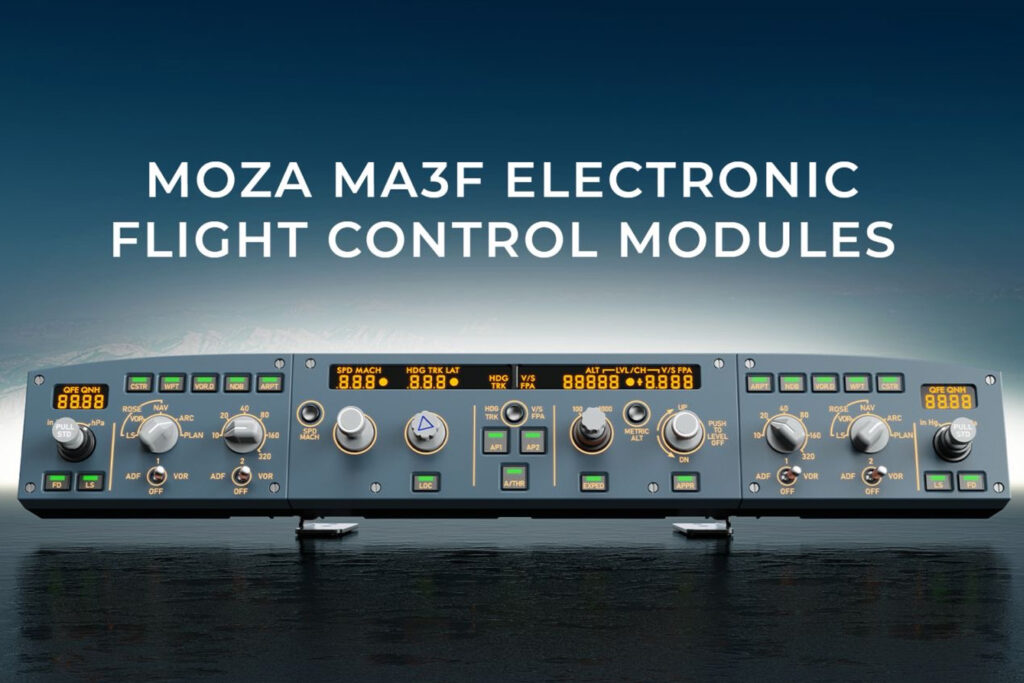
- The MA3F Electronic Flight Control Module (EFCM), an Airbus-style FCU and EFIS unit, features a dual-rail push-pull mechanism designed to replicate the feel of autopilot controls. Available in several configurations, ranging from the FCU alone to the FCU plus EFIS combo. The main unit costs 159 euros; the R and L versions cost 109 euros each.
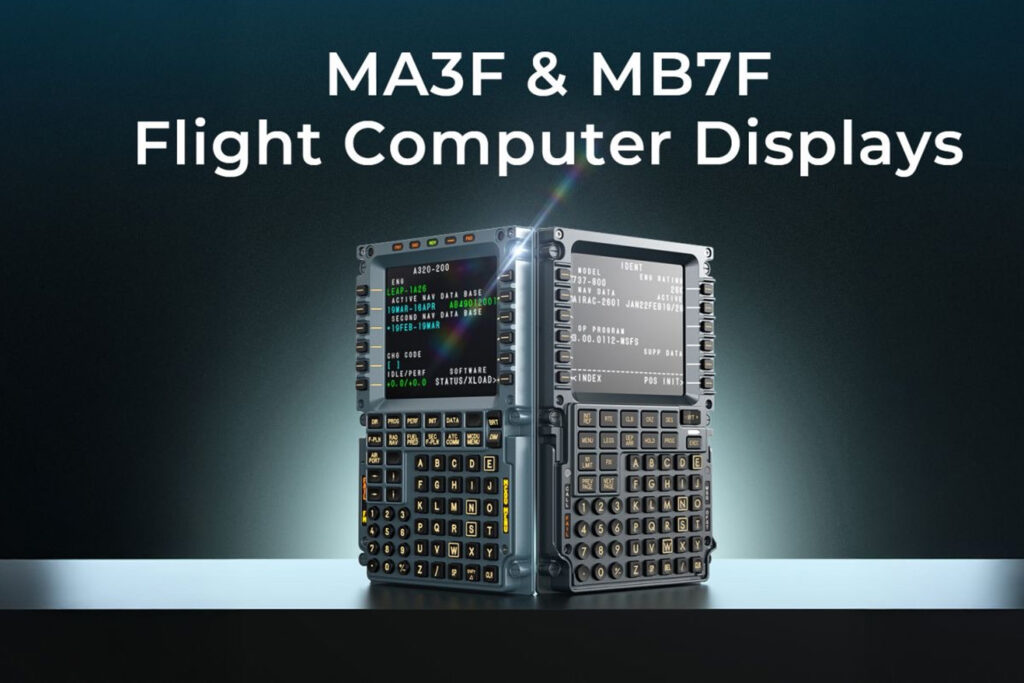
- The MA3F and MB7F Flight Computer Displays, which bring Airbus (MA3F) and Boeing (MB7F) flight management workflows to your desk, feature a high-resolution IPS screen, a die-cast metal front panel, and professional-grade switches. 209 euros each.
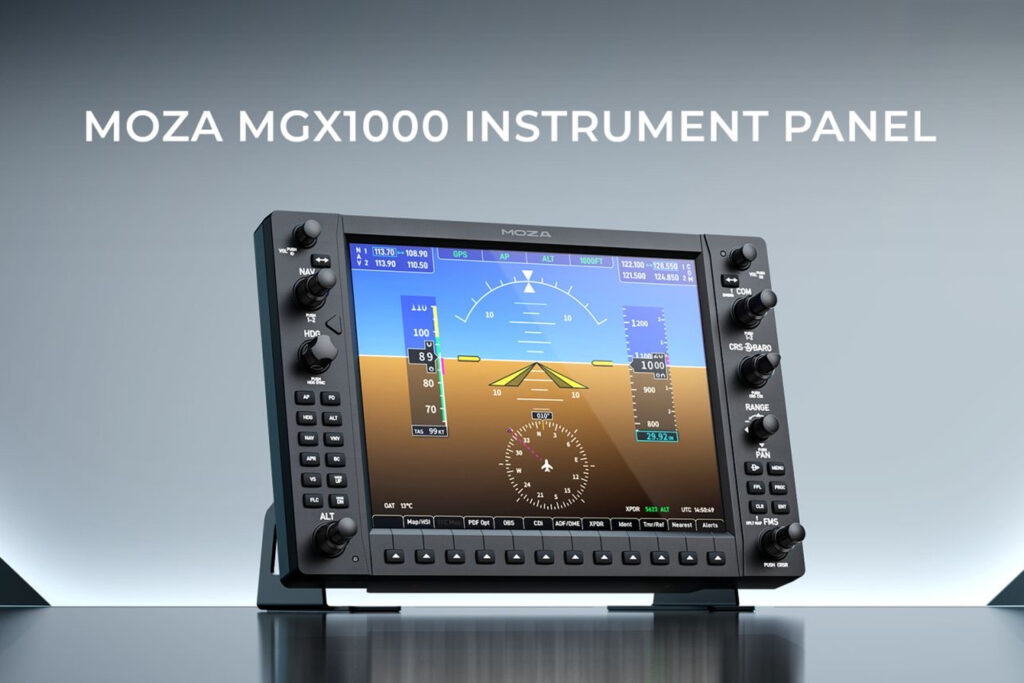
- The MGX1000 Instrument Panel, a G1000-style instrument panel for general aviation, features a 10.4-inch IPS display and precision rotary encoders. 469 euros.
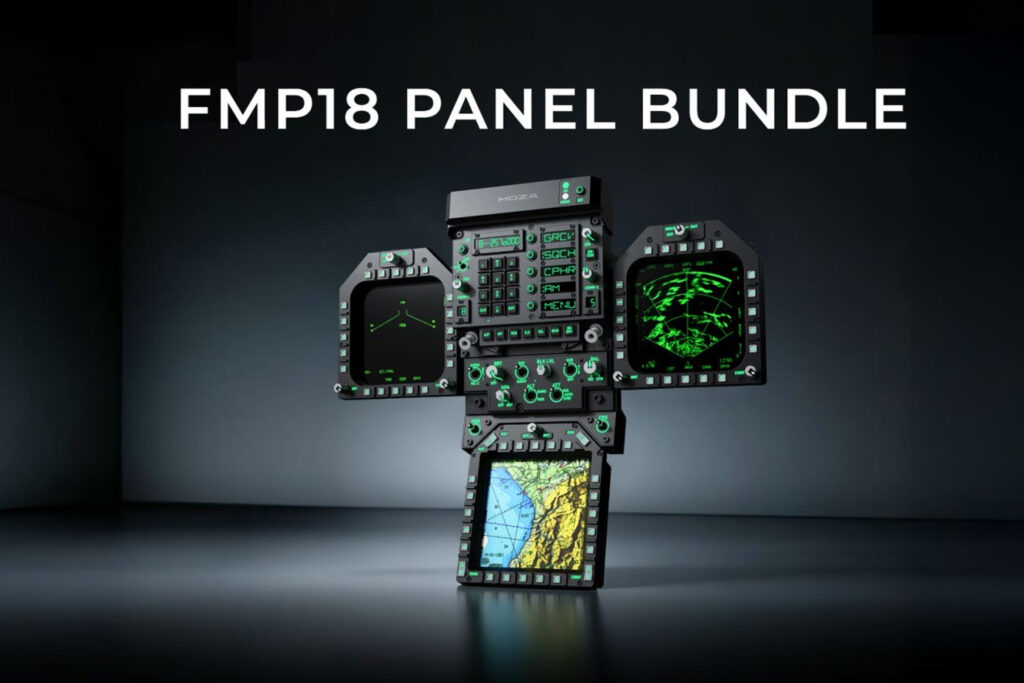
- The FMP18 Panel Bundle, a set of panels inspired by a carrier-based fighter jet cockpit, featuring multiple built-in screens and a design with interchangeable magnetic bezels (Pogo Pin connection) for quickly changing configurations. 889 euros.
DisplayLink: The Technical Case
The real common thread running through the announcement is connectivity. Setting up a multi-screen cockpit usually requires multiple HDMI outputs, sometimes an additional graphics card, and a messy tangle of cables. MOZA is banking on DisplayLink technology here: the screens connect via USB, without taxing the GPU or requiring multiple video outputs. On paper, this significantly simplifies setup and opens the door to larger, more scalable configurations. This is the most interesting aspect to watch, as this is often where DIY cockpit projects hit a snag.

An ecosystem that complements each other
All of these products are controlled via the in-house software MOZA Cockpit and MOZA Pit House, which enable centralized configuration, lighting synchronization, and telemetry integration. The stated goal is clear: to allow users to start with a single screen and then expand the setup over time without having to start from scratch.
Key Takeaways
With this lineup, MOZA is no longer just selling peripherals: the brand now provides the entire electronic setup for the cockpit, from racing wheels to the instruments of an Airbus. And that’s perhaps where this announcement is truly a game-changer. For a simracer already equipped with MOZA gear, setting up a real flight station becomes possible within the same ecosystem, using the same software, without having to start from scratch. Add to that aggressive pricing compared to standard avionics equipment, and you have a much more accessible gateway to the cockpit of your dreams. The build quality will need to be confirmed once the hardware is in hand, but in principle, seeing a player as established as MOZA take its flight sim offering this far is excellent news.
0 Comments